
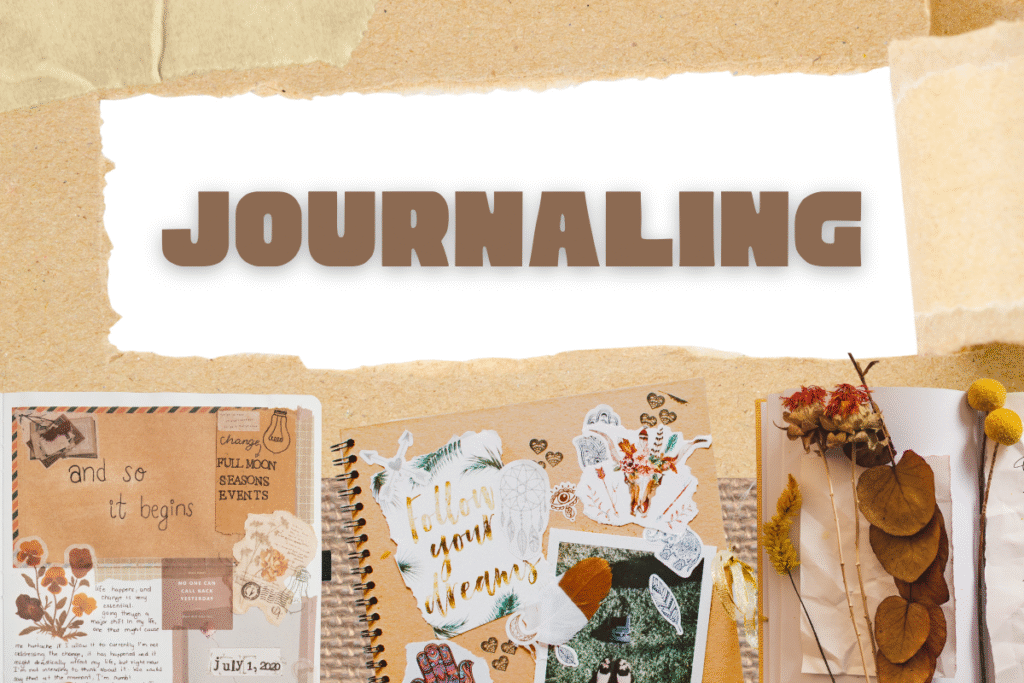
It took me a while to decide what my first post would be about, but it only seemed natural to start where my writing journey began – journaling.
Throughout the years, I’ve done all sorts of writing – essays for school, letters to friends, to-do lists (yes that counts!) – but nothing quite holds a candle to journaling. Here’s why.
Journaling is an act of self-communion.
It forces me to slow down and reflect, without demands, without expectations, and without judgement. It requires only that I put a bit of myself on record. As time passes, I then revisit my past entries and see where and who I’ve been. In that regard, it’s a guide to me – to how I think, how I process, how I plan, how I dream… That ability to understand myself through time allows me to contextualize the remnants of my past self that still exist today and overall, just understand myself better.
Beyond that, journaling is an art form.
As a creative act, there is a lot of flexibility when it comes to journaling. There are no limits to the different mediums and styles you can experiment with. You can paint in your journal one day or staple something in it the next. You can scribble something down or try your hand at using a calligraphy pen. Half the fun of journaling comes from this act of exploration, and nowadays, there are so many options to choose from. From traditional pen and paper to phone apps, you’ll be sure to find something that suits you.
In today’s episode, I will cover:
- Nontraditional journaling
- My favorite journaling mediums
- Getting started & finding inspiration
Part 1: Unconventional Journaling
Traditional journaling requires a writing utensil and something to write on. That’s it. I’ve journaled on folded up printer paper, in the margins of school notebooks, on post its, on takeout menus, etc. But traditional journaling doesn’t always come naturally to people, because traditional journaling requires writing, and not everyone likes that.
If you’re not writing-inclined, there are other ways to journal. Here are ways in which I’ve journaled without writing:
- Tape in:
- Notes and cards from old friends
- tickets from past experiences
- Old itineraries
- News clippings
- Photos
- Washi tape
- Origami
- Sketch:
- old friends
- made up scenes & characters
- food & drink
- unique coins
- Collect:
- Memory cards full of photos
- Foreign currency from travels
- Expired ID cards
- Ephemera from my past lives
- Stickers
Aside from the physical collection of memorabilia from my life, I also consider building scrapbooks, mood boards, and photo albums a form of journaling. The adage goes, “A picture is worth a thousand words.” A caption here or there to describe the significance of what you’ve collected is sufficient.
If you are writing inclined, but feel overwhelmed by the idea of writing paragraphs, there are plenty of other ways you can begin writing as well. My three favorite ways to write without any real structured writing are:
- Bullet journaling – Writing life updates in bullet format, with no particular order. I just write what comes to mind. This could include a recent trip I took, a newfound song, a newfound interest, a book I’m reading, a conversation I had with a friend, the weather, my current worries, my current wins, etc. A fun prerequisite to this is creating word-chains. I start with a random word, like “bird,” and then write down the next word that comes to mind, like “flamingo.” That pattern then continues like so: “bird> flamingo> pink> color> rainbow> pride> sparkle> star> nebula> purple> years> time> space> planet> eye> storm> rain> quiet.” You continue this process until you stumble upon a thought that you can elaborate on in the form of a simple phrase or sentence that you can catalogue in bullet format.
- Fact journaling – Facts are sometimes easier to start with. This could include a current event headline, my recent results from a doctor’s visit, the things on the desk in front of me, what I’m wearing, or even something I plan to do. It’s both a great grounding exercise and a way to capture a snapshot of where I am. The feelings that arise about those facts then follow, or I can choose to skip that and perhaps return to that in the future.
- Quote journaling – I once read about the three types of “unknowns,” the unknown that you know you don’t know, the unknown that you don’t know you don’t know, and the known that you know. Quotes often help you recognize the known that you’ve forgotten or ignore. That’s what makes a good quote so satisfying. It latches onto something inside of you and pulls it into the light. I’ve included quote journaling on this list, because it requires little effort to write but offers a lot of insight into how you feel at the time of recording.
Part 2: My Favorite Mediums
My two favorite mediums for journaling are (1) pen and paper writing and (2) digital mood boarding. They have consistently proven to be:
- a) the most convenient
- b) the most natural way for me to express myself, and
- c) the most satisfying way for me to review my work.
“Pen & Paper”
I am not particular about where I write, but it’s important for me to keep all my writing in one place. So, I’ve ripped out pages from notebooks and affixed them to my ‘main journal’ more times than I can count. I’ve used staples, tape, stickers, etc. – whatever gets the job done. Likewise, I have written in marker, glitter gel pen, pencil, paint, and even makeup. It doesn’t matter to me how I leave my mark, as long as it’s most true to where I was and how I felt at the time.
Here are some of the “pen to paper” mediums I’ve used:
- Stone paper – It feels so smooth, but ink will smudge like crazy! Opt for pencil when writing on stone paper. Give this one a shot at least once, at least for the tactile experience.
- Transparent sticky notes – just like stone paper, I recommend using pencil to write on these. They’re extremely versatile and a great way to leave retrospective commentary on previous journal entries
- News clippings – I consider this one a short cut. You can write about what’s happening and then record your feelings on the matter, or you can write directly in the margins of an article itself.
- Artistic paper – This medium primes you to leave behind the traditional methods of journaling. Why not leave splashes of paint or the extra inky markers when you know the paper can handle it? Watercolor paper is a favorite, and they come in many varieties.
- Envelopes – Unlike photo albums or scrapbooks, envelopes give you options. They come in various shapes, colors, and sizes and a have a limited amount of space. If you’re in a rush and can’t be bothered to slow down but you still want to start “journaling,” grab 3 objects that will fit into the envelope, toss them in, seal the envelope, and label the envelope with the day’s date. I love the time-capsule approach to journaling. It’s a history-lover’s chance to become the subject in a few years’ time.
Here are some of the writing apparatuses that I’ve used and enjoyed:
- Legami erasable pens – They come in super cute animal designs and are completely erasable! I currently have a unicorn, an elephant, a dinosaur, and a black cat.
- Pilot G2 gel pen – it’s smooth. It’s reliable. Need I say more?
- Novelty/character pens – I had a pen that I got at the Franklin Institute in Philadelphia when I was a kid that I kept with me for years. It was shaped like a golden sarcophagus. More recently, I’ve held onto a Gudetama-themed pen that a friend gifted me for my birthday. The only downside is that novelty pens tend not to write smoothly.
- Writech 05 gel pen – I first got this in the back of a Paper Source store. They come in pastel shades and write so smoothly. There’s no “click” when you open the pen.
Digital Mood Boarding
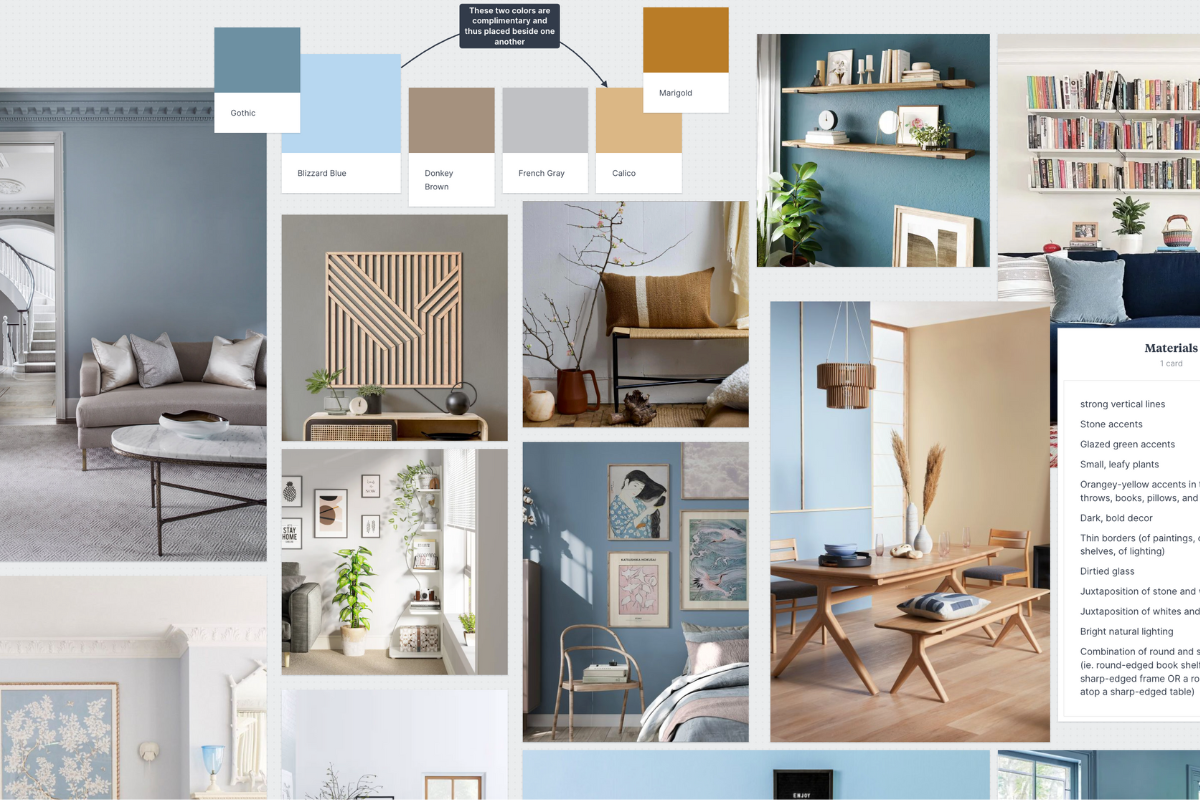
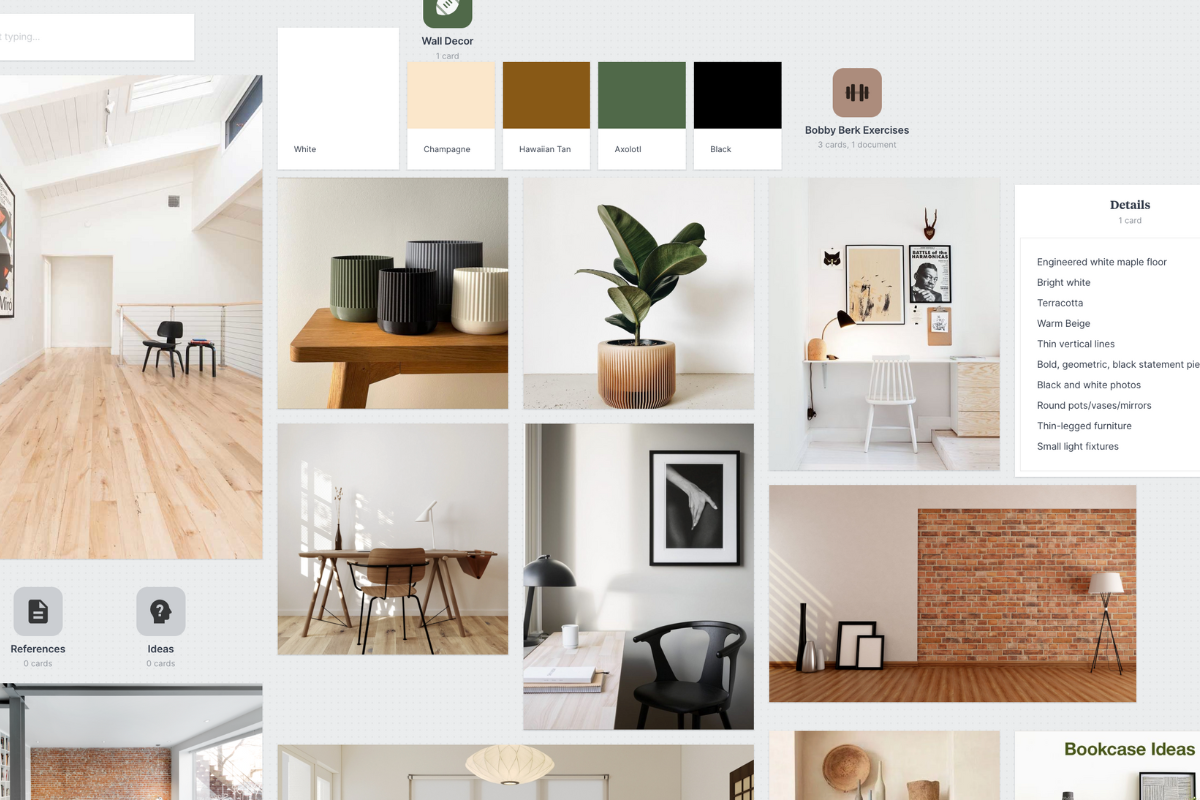
In 2021, I discovered an app called ‘Milanote,’ a project management tool for creatives. It’s incredibly versatile, and I’ve used it for everything – from interior design to party planning. Here are what some of my interior design boards look like
It’s fantastic for brainstorming, storyboarding, and mood boarding, and in the context of my everyday work, I’ve used it to make:
- Character and setting profiles
- Chapter timelines
- Brainstorm boards for plot ideation
- Brainstorm boards for brand ideation
But in the context of journaling, I’ve recently begun to test the idea of mini mood boarding. It’s akin to the “starter pack” internet trend, with the idea being that a small collection of visual elements would capture my mood at a particular moment in time. Some examples would be:


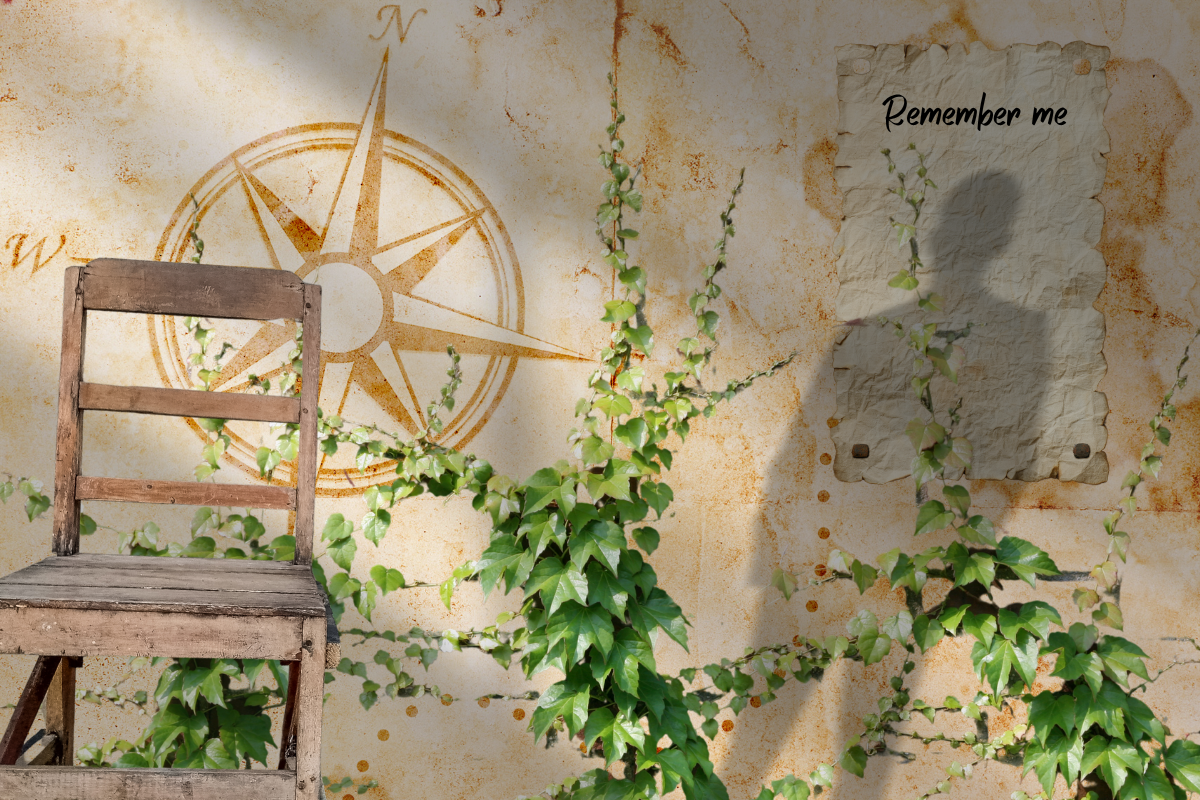
The idea of mini mood boarding appeals to me for several reasons:
- I like the flexibility it gives me if I don’t have time or energy to invest in writing extensively.
- It’s a great way to practice the skill of transforming thought and feeing into something tangible out in the world (in a way that is low commitment).
- It requires no physical storage.
- In contrast to pen and paper journaling, digital mood boarding is easy to share with others.
Part 3: Getting Started & Finding Inspiration
If you’re just getting started with journaling, it might not be easy to know where to start. There are a lot of options and no single “right way to begin.
I would recommend first getting something down. It doesn’t matter what. You could write down a word or even spill a drop of coffee on the paper. In some way, leave a mark. Once you’ve left your mark, think about how it makes you feel or perhaps ask yourself why you left the mark in that way. This is the questioning stage – the step in which you get curious about yourself. You don’t have to stay in this stage for long. It’s enough to just get a single thought down, like “That splotch of coffee reminds me of a map in a book,” or “The word ‘bird’ reminds me of that time I saw a flock of geese taking off.”
Once that’s done, you could leave it at that. But I find that once I’ve passed those two stages, I’ve primed myself to continue down the road of reflection. Ie. “I saw that flock of geese taking off over the parking lot where they had the local fair. That was such a great event. The Ferris wheel before the sunset looked like a scene out of a movie. I’m so grateful for that moment…” Add a time and date stamp to that, and that’s a certified journal entry.
But if you still find yourself struggling to write, here are some of my favorite resources for inspiration:
- Magazines – I recently bought a Daphne’s Diary catalogue, and I love it. You can also find inspiration from a fashion magazine or a health magazine. Find a magazine that focuses your interests and see what articles or layouts speak to you.
- Other magazines that may inspire you if you are interested in scrapbooking or taking a non-traditional journaling approach: PAPER, PAPER, PAPER and Art Journaling
- Poetry – There are websites like the Poetry Foundation that send poems to your inbox daily. Use that as a starting point for reflection.
- Read – There is no better way to get started writing than by being a reader. If you find yourself pulling a blank when you look at the paper, fill your mind with words.
- Community – While journaling is often a private exercise, it doesn’t have to be. If you find motivation through community commitment, then go that route. Find someone willing to join you and share with them. Trade ideas and feedback to both inspire and encourage one another.
I find a lot of satisfaction in the act of discovery, something that I believe is central to journaling. If you can, find the time to record a piece of yourself. Hold on to it, and bear witness to your own changing person. Whether you put ink on paper or use an app on your phone, whether you leave your mark in lipstick or charcoal or sharpie, whether you use your own words or borrow another’s, I encourage you to start. You would be surprised what mundane things you will find interesting about yourself in a few years.
I hope you enjoyed today’s episode and that you join me at my desk next time.
Until then, get journaling!
Emily