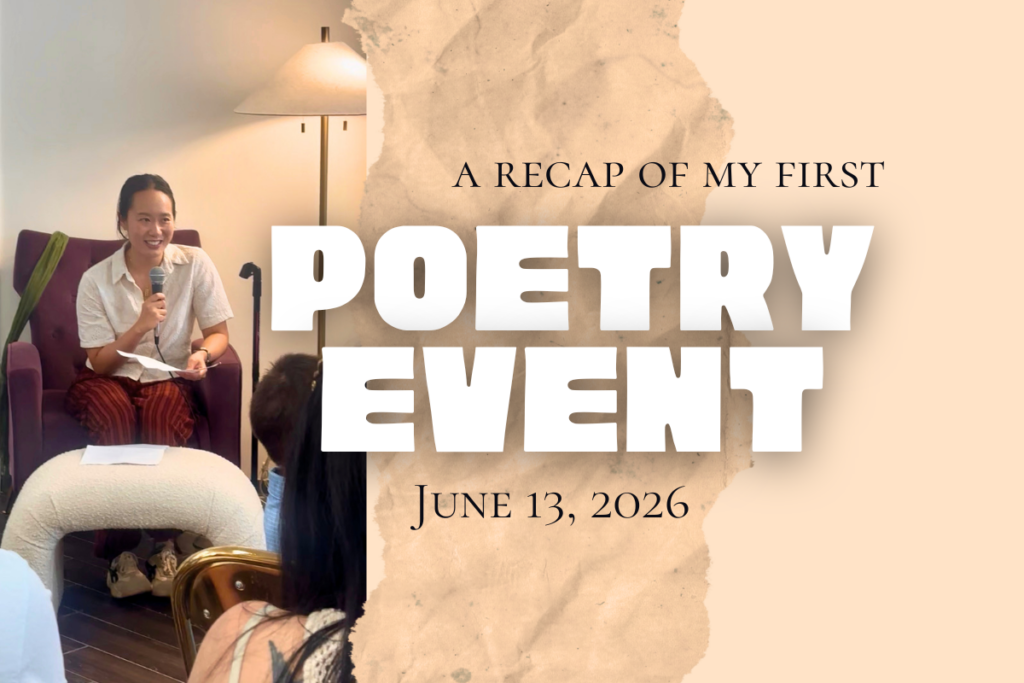
Today is a Thursday. It’s been five days since I hosted my first ever in-person poetry event. It was nerve-wracking to prepare for but a fantastic experience, and if I had the time to host another one soon, I would.
I suppose that brings me to the back story of how this all came together in the first place.
The backstory
I started my writer Instagram during the summer of 2025. It had been something I wanted to do for a while but put on the back burner in favor of powering through my book. After several months of figuring out how to grow and speaking with other writers about how they grew their platforms, I decided to try putting my work out there in person. I asked a local coffee shop if they would be willing to keep my poems by the register – free for anyone to grab, and they were amenable to the idea. Motivated by this win, I then approached the Book House in Millburn, NJ to see if they would do the same. They said things worked differently there.
They said that the only capacity in which they would work with local authors was through events. The structure was: a 2-hour session in which the author would come in and talk about their work. The exact format of the event was flexible. I was stumped. On the one hand, the thought of hosting an event was exciting, but on the other hand, it would be a lot of work. I decided to dive in anyway. That’s often my problem.
I spent about a week working on the logistics of the event – the content, the media, the invite, the items available to sell (because that was the expectation; I’m there to sell something), the activities, the food & drink. If you’re familiar with me or my work, you know by now that the majority of everything I produce is a one-woman show (honestly, not by choice but you work with what you’ve got.).
What it was all about
I pitched this idea as a poetry event, because for the last few months, poetry has been my modus operandi on social media, the method through which the majority of my “potential reader base” has connected with me. There, I use poetry to get readers familiar with the types of themes that I tackle in my book and the emotional atmosphere they can expect from it. (I also have fun and insert a lot of my own personality here and there, which is why my Instagram account lacks obvious cohesion.)
So, with this in mind, I prepared a presentation that spoke to both my poetry and my book, specifically focusing on the answer to the question: “Why do you write poetry?”
I spoke about poetry as an experimental medium for me and how that’s invaluable to my other writing projects. As emotional and thematic short form, it allows me to zoom in and out at will. That helps me train my ability to see writing projects at both a macro and micro level. For example, in contrast to my fantasy book which is hundreds of pages long, a poem is often no longer than a single page. That allows me to evaluate theme, form, flow, and foreshadowing far quicker and far more often than I could possibly do otherwise. At the same time, I can zoom in on moments, magnifying them many times over. The most fleeting feeling or event – like a leaf falling and the sense of time passage that comes with its descent – can be turned into a multi-line poem. And the intent, of course, is that I am saying something meaningful in each line. The opportunity to become better at magnification has helped me significantly as I go through final edits of my book, since I used to struggle with pacing.
Another freeing aspect of poetry is that I am not constrained by the typical rules of prose. I don’t have to worry about character development, world building, plot development, or the like. Every character in a poem can be nameless, formless even. There doesn’t even need to be a character. In this way, poetry is a creative playground for me, and frequently, it’s impromptu.
Then there’s the way poetry trains my ear to better hear the rhythm of prose. All good prose is a little poetic, and all good poetry tells a story. In the past, I used to read my drafts out loud to listen to the way the words fell, like a song. Honestly, I still do sometimes. But poetry has made me far better attuned to the flow of my writing.
I alluded to this earlier, but my final point in this part of the presentation was how poetry helped me with pacing. When I first started writing, immersive writing didn’t come naturally to me. I struggled with scenes in which too many things were happening at the same time or occurring too quickly. As I’ve grown as a writer, I’ve gotten better at pausing and zooming in on the scenes that really matter. Poetry has helped me immensely with atmospheric immersion that isn’t too on the nose. I do my best not to explicitly state how things are but rather show readers how things are. This is in line with the old writing adage: show, don’t tell.
The Poetry Reading
After answering the “why,” I read two of my favorite poems” You, I, & An Inverted Sky and What Flows in the Desert. Both of these poems are contemplative poems, but they highlight very different emotions. I started with You, I, & An Inverted Sky.
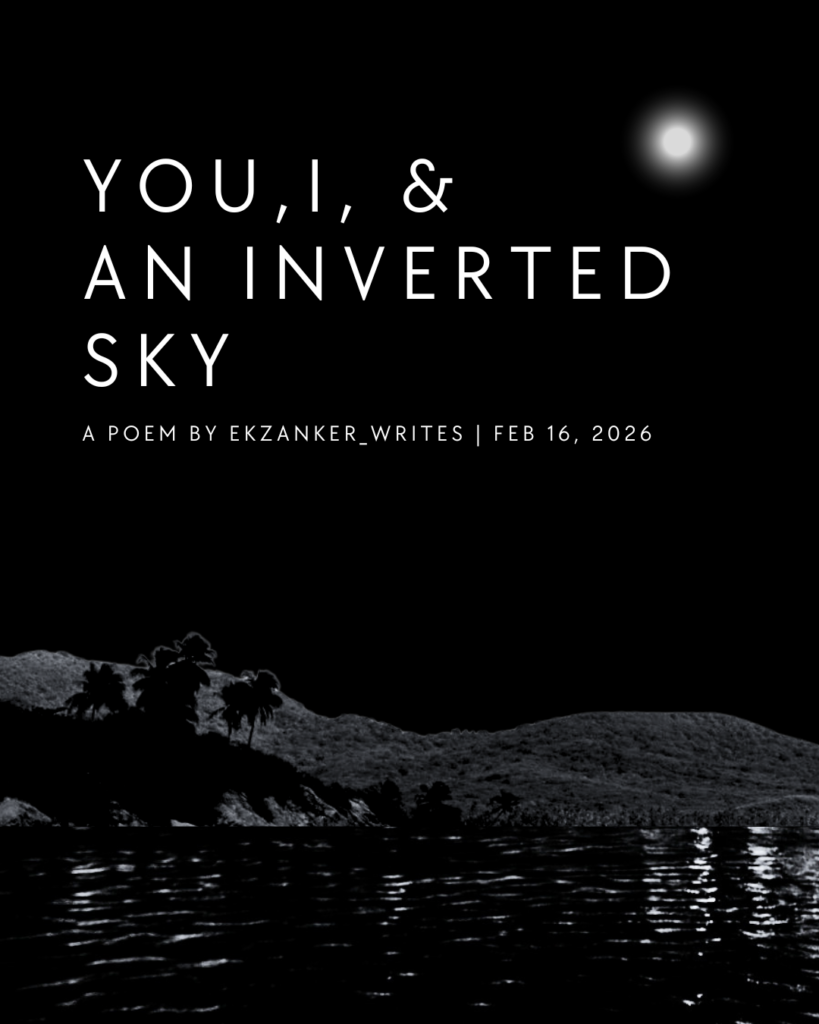
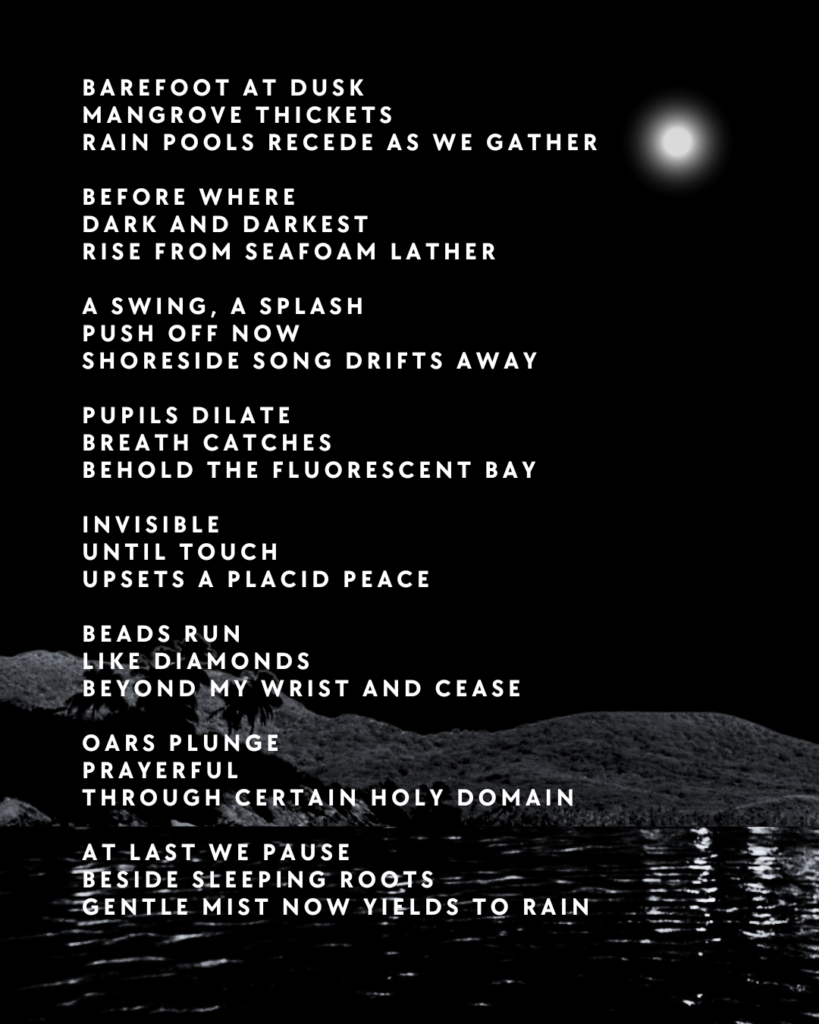
I asked the audience what they thought the dominant emotion in this poem was. They were incredibly perceptive and came up with some awesome answers! They mentioned “awe” and “peace,” both of which I myself had written in response to this question. Then I spoke about the central image in the poem card (I always create accompanying visuals for my poems.) calling specific attention to light in the darkness. But unlike most light vs. dark motifs, what made the scene in this poem special is that the darkness was overwhelming.
The inspiration for this poem came from a trip I took to a bioluminescent bay in Vieques, Puerto Rico. It was an overcast night, and we paddled far from artificial light, until the water and sky were nearly inseparable. That overwhelming gloom is what made every speck of light more brilliant. I wrote this poem to capture the sense of awe that I felt in that paddleboat – the wetness, the wonder, the free-floating sensation of being surrounded by things that are beyond me and yet allow me to visit. I wrote the beginnings of this poem the minute I got back to my room, before I went to sleep that night. This sense of urgency is common in my poetry-writing process.
The final comments I had for this poem were about the 3-ARC structure that is common knowledge in storytelling, specifically: exposition, conflict, and resolution. I was excited to see that even in this small poem, I had managed to tell a story that somewhat adhered to this principle. I broke the poem up into three parts and presented that to the audience:
Exposition:
Barefoot at dusk
Mangrove thickets
Rain pools recede as we gather
Before where
Dark and darkest
Rise from sea foam lather
Conflict:
A swing, a splash
Push off now
shoreside song drifts away
Pupils dilate
Breath catches
Behold the fluorescent bay
Invisible
Until touch
Upsets a placid peace
Beads run
Like diamonds
Beyond my wrist and cease
Resolution:
Oars plunge
Prayerful
Through certain holy domain
At last we pause
Beside sleeping roots
gentle mist now yields to rain
Then I began the reading of my next poem: What Flows in the Desert.
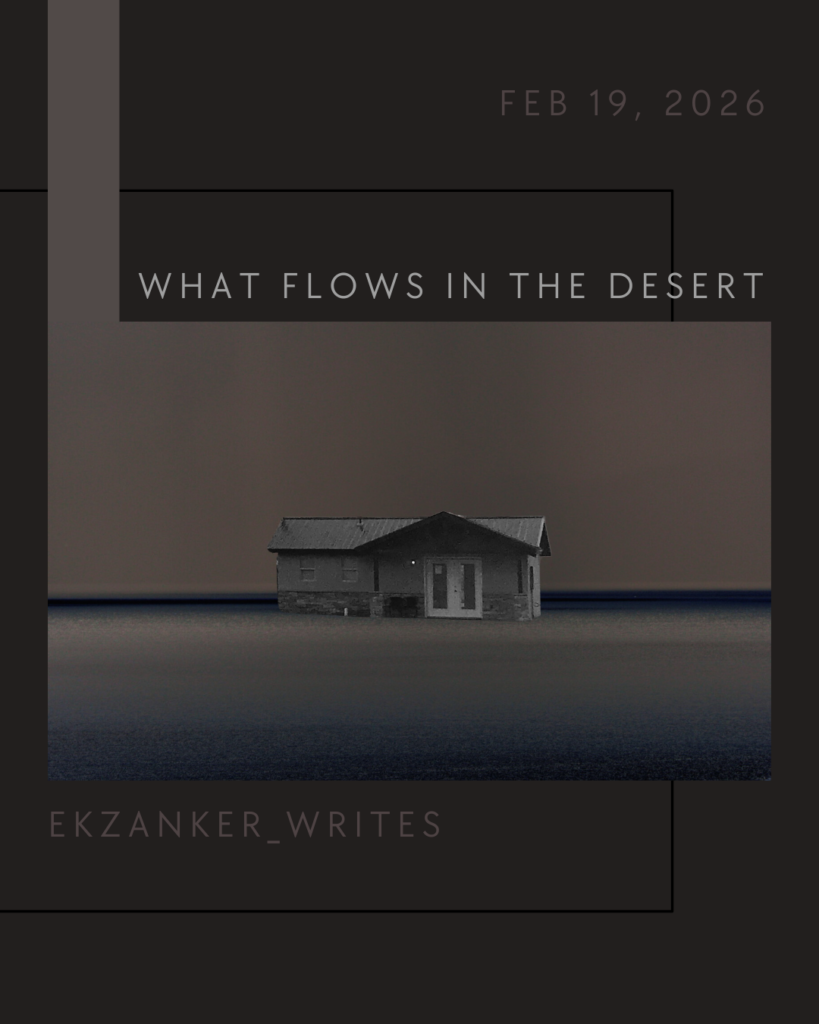
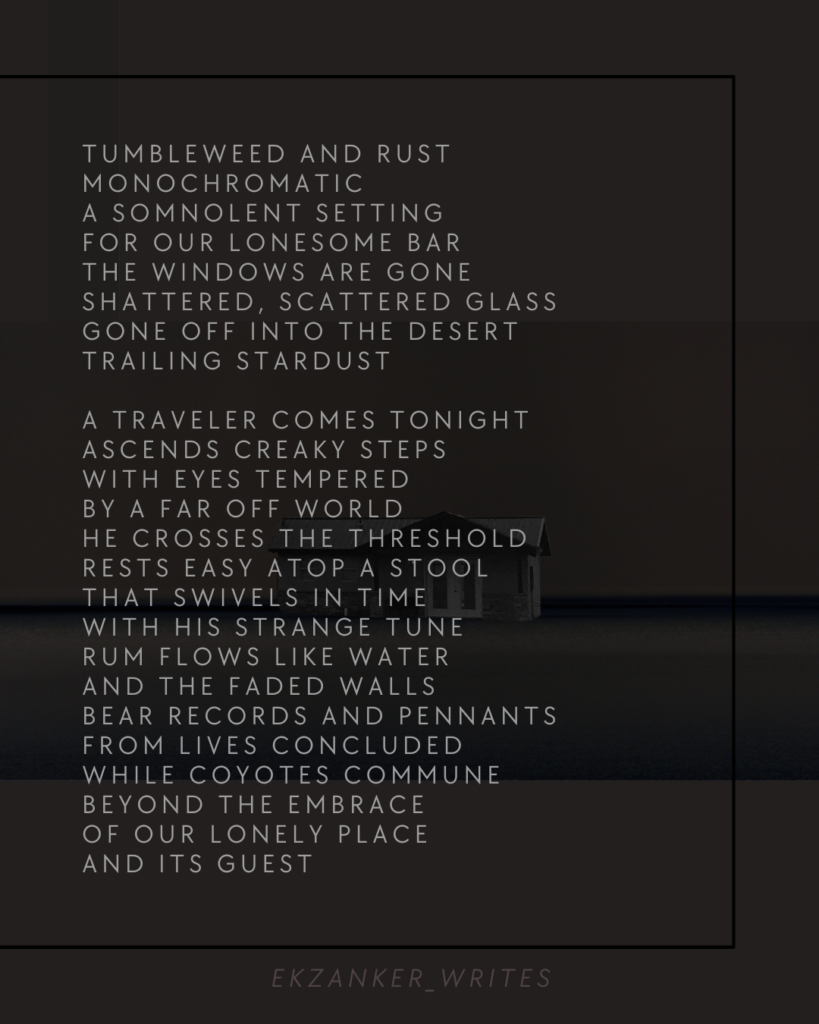
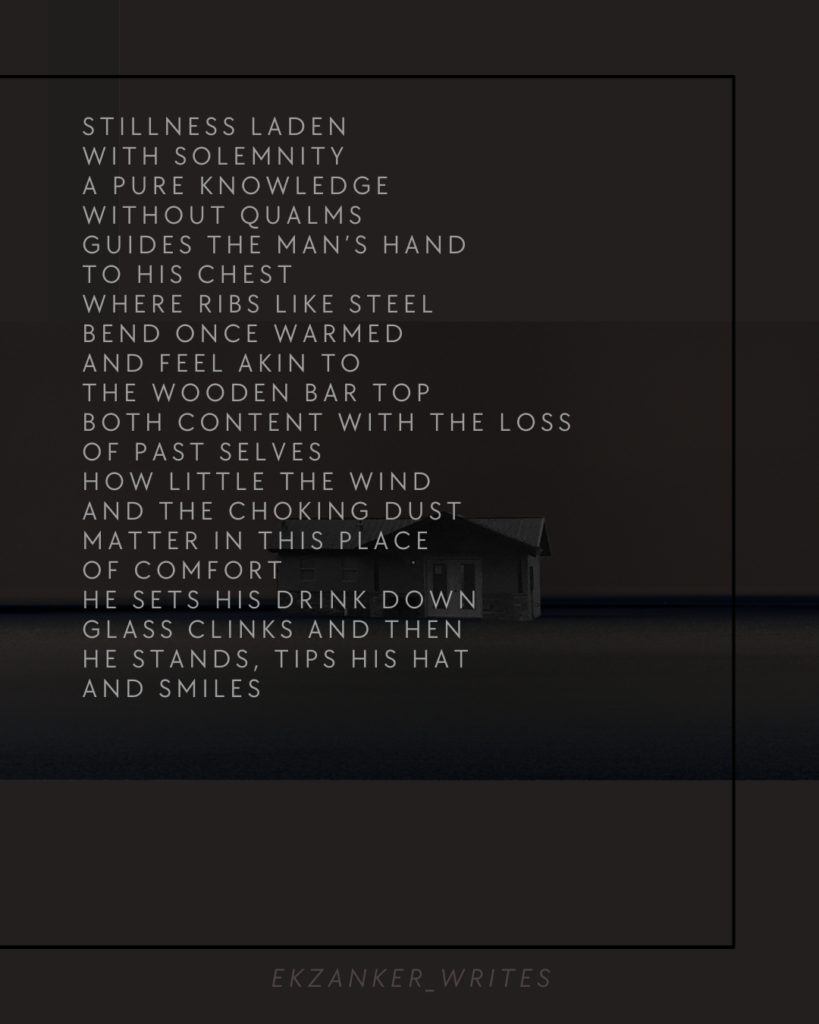
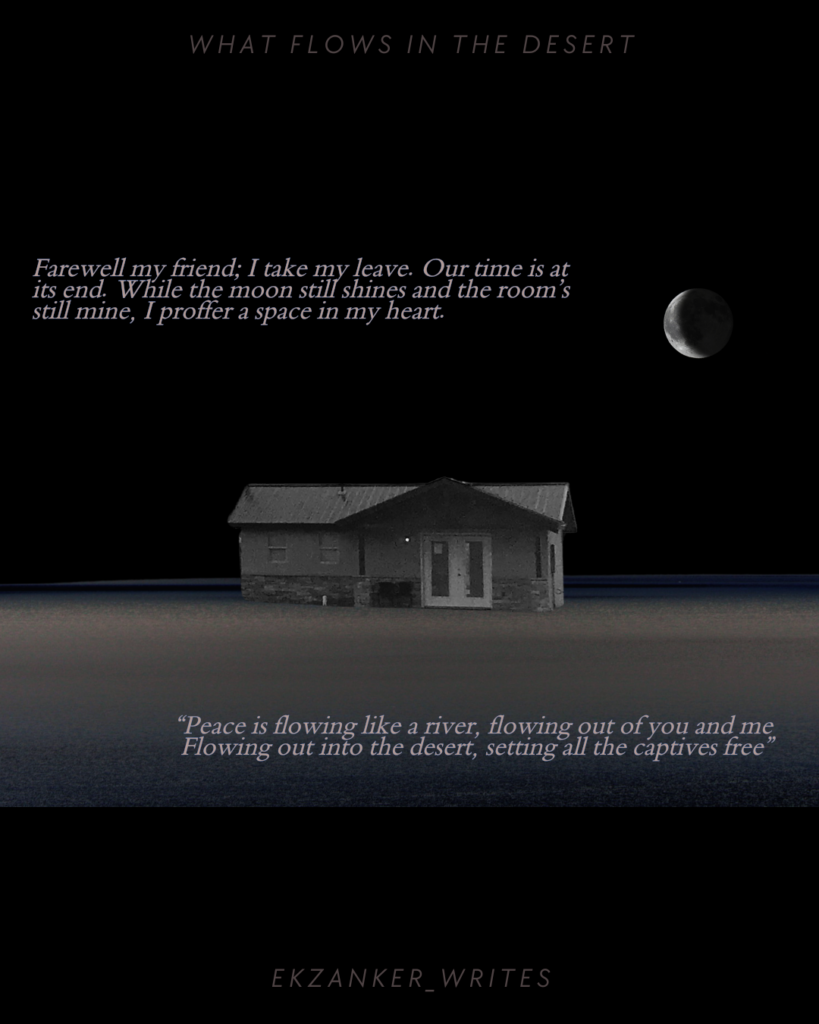
Just as I had done with the first poem, I asked the audience what they thought the dominant emotion here was. (Feel free to stop here and try this exercise for yourself!) They identified the themes of “goodbye” and “sadness” and I added on the themes of “peace” and “acceptance.”
The central image here was the bar, and I highlighted that the bar could be understood in more than one way:
- It could be an emotional setting that the traverler visits
- It could be representative of a person with whom the traveler shares history or a person who holds onto the history of others.
These are not the only two ways in which you could interpret this, but there is a sense that despite the traveler being “alone,” he is anything but.
This poem was also an opportunity to talk about something that I love to explore in all my writing: the tension between positive and negative emotion, or as I said during the event “the bittersweet.” I read some of the words in this poem that could be considered negative or positive and explained how their juxtaposition made for something authentic.
The Positives:
Stardust, rests, water, commune, embrace, pure, warmed, content, comfort, smiles
The Negatives:
Somnolent, lonesome, gone, shattered, scattered, creaky, faded, concluded, loss, past, choking
Then I briefly spoke about FOIL characters in literature. FOIL characters are typically placed in close proximity to one another for the sole purpose of making the other one’s characteristics stronger by comparison. In the context of this poem, the positives act as FOILs for the negatives and vice versa.
The Interactive Activity
After the poems were done, I turned the creative floor over to my audience. When they signed in, they were all prompted to pick up one of my “business cards.” On the back of each card, there was a colored dot and an emotion. This is what they looked like:
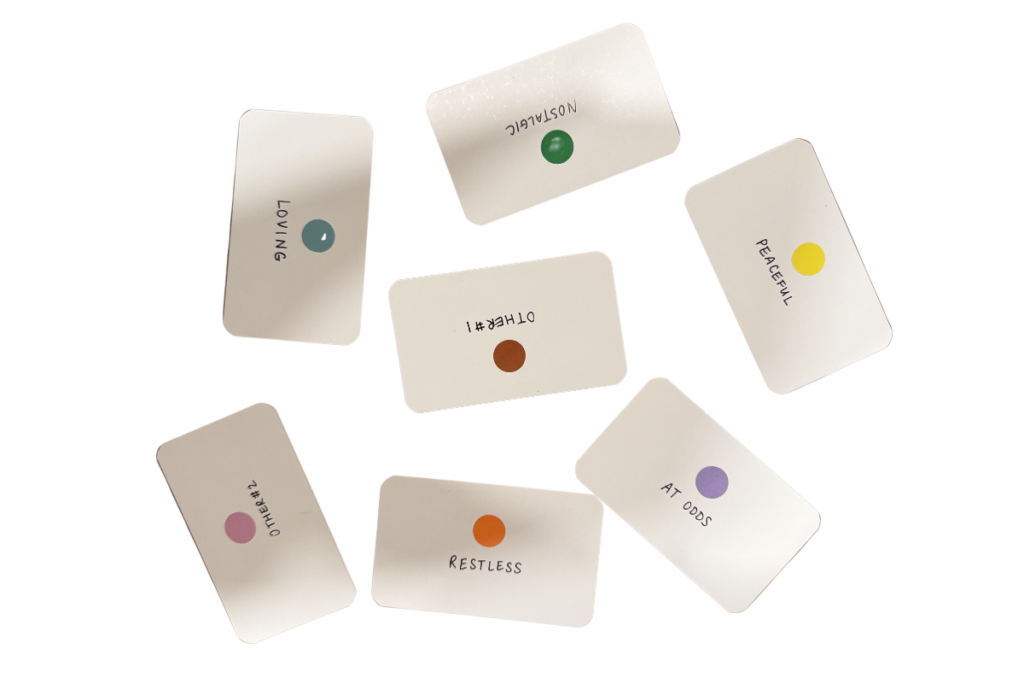
The emotions are as follows:
1. Nostalgic
2. Peaceful
3. At Odds
4. Restless
5. Loving
6. Other #1
7. Other #2
If participants received ‘Other #1″ or “Other #2” then they were free to pick an emotion of their own, but I provided alternative emotions such as: relief, homesickness, melancholy, wonder, grief, and gratitude
Then, I gave them the following prompt:
1. Identify and describe an image or scene that relates to the emotion that you received/chose.
2. Explore that image or scene using the five senses: taste, touch, sound, sight, and smell
After five minutes, I gave the audience an opportunity to share what they had written. It was really wonderful. One audience member wrote about awe and the sea. Another audience member wrote about love and tears. I was really blown away by how invested the audience was in the presentation.
The Conclusion
Here, I concluded the event with a bridge to my book, the main character out of all my writing projects. I specifically talked about how the nature-based imagery common in my poetry is something that I likewise use in my book to create both physical and emotional settings. The example excerpt I read was from my fifth chapter, about a girl from a cursed family and the boy that poses a threat just by falling for her:
“They headed westward, away from town, pushing through the knee-high grass as though they were wading through water. Crickets chirped, the earth sighed, and a warm breeze blew the scent of drying veld all the way to where the clouds thinned, revealing stars that glittered like diamonds.
He snuck a sideways glance at her, hoping she wouldn’t notice. She had changed much since they last met. The softness in her face was gone, as was the gentleness in her gaze. Her jaw had sharpened, and her hair was onyx black. Still, near the top of her head, traces of honey blonde peaked out. She turned to him, and his heart skipped a beat. She had such sad eyes – deep gray as a storm.”
My Takeaways
This may sound terrible, but my favorite part of the entire event was the FAQ portion. Once I had officially concluded the speaking portion of the event and opened it up to questions from the audience, I realized how engaged my audience was. They asked me the best questions about my writing process, my concerns about the writing industry, and what my plans look like going forward.
In future events like this one, I think I may focus more on the poetry readings and interactive activities rather than explaining the value of poetry to writers that are working on other projects, since that might not resonate with audience members that are not themselves tackling a writing process. Instead, I think it would be better to focus what everyone can relate to.
Small takeaways include:
- I should announce activities loudly instead of assuming people will read my signs on the table.
- I should make the presentation more interactive from the beginning.
Finally, I’d like to mention my “Anonymous Poetry Fodder” jar that was beside the sign in sheet. I provided two prompts for the audience to fill out, and the responses were just wonderful. I made a post about the results here.
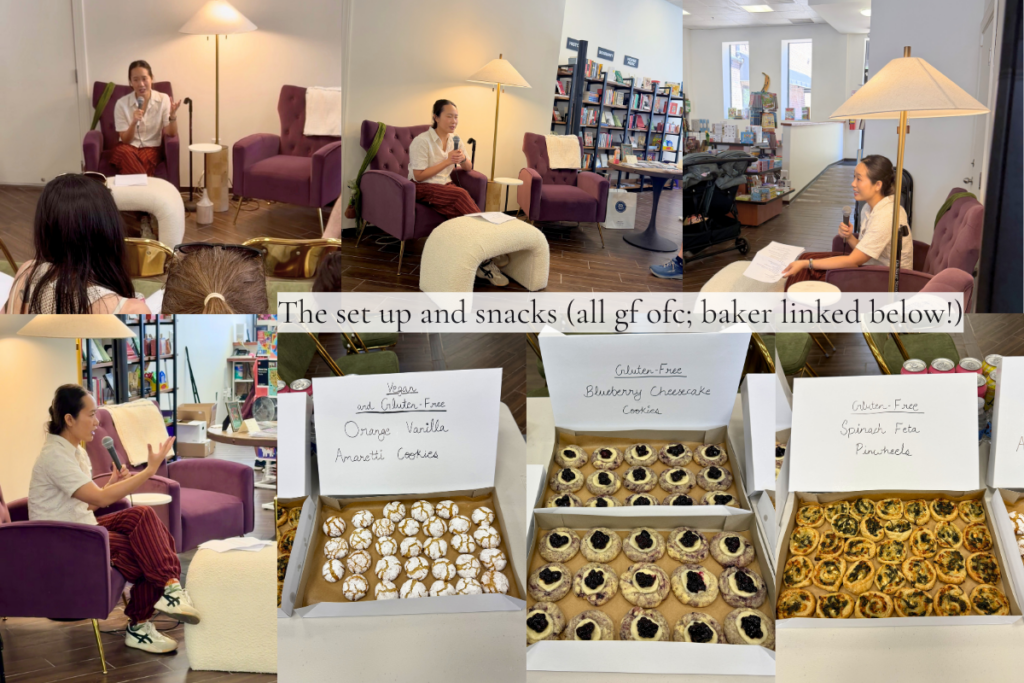
Pictures & Videos from the Event