
By now, most people active on social media have heard of the Labubu toys. Frequently overlaid with upbeat music, collectors unbox their newest pastel-colored, fuzzy characters whose claim to fame is far less known than their existence. Though the Labubu has now become a worldwide phenomenon, that wasn’t always the case. For nearly a decade, Kasing Lung, the creator of the Labubu, has worked on storybooks, toy design, and illustration featuring the world of The Monsters. His dedication to his craft and his motivations behind his work speak to the artist’s quiet way – a creative process that centers reflection on one’s human condition, a desire to live vicariously through one’s own creation, and the desire to belong.
Today’s episode will focus on some of the lesser discussed parts of the Labubu story, namely:
- The rise of an incredible artist, whose story is symbolic of the interconnected world that we live in today
- The cultural significance of the Labubu
- The Labubu’s positioning in a hyper-consumerist environment
- Characters like the Labubu from the past
- An exploration of collectors’ psychology
- What the most viral Labubu content misses
Let’s start with the most natural first question.
What is the Labubu?
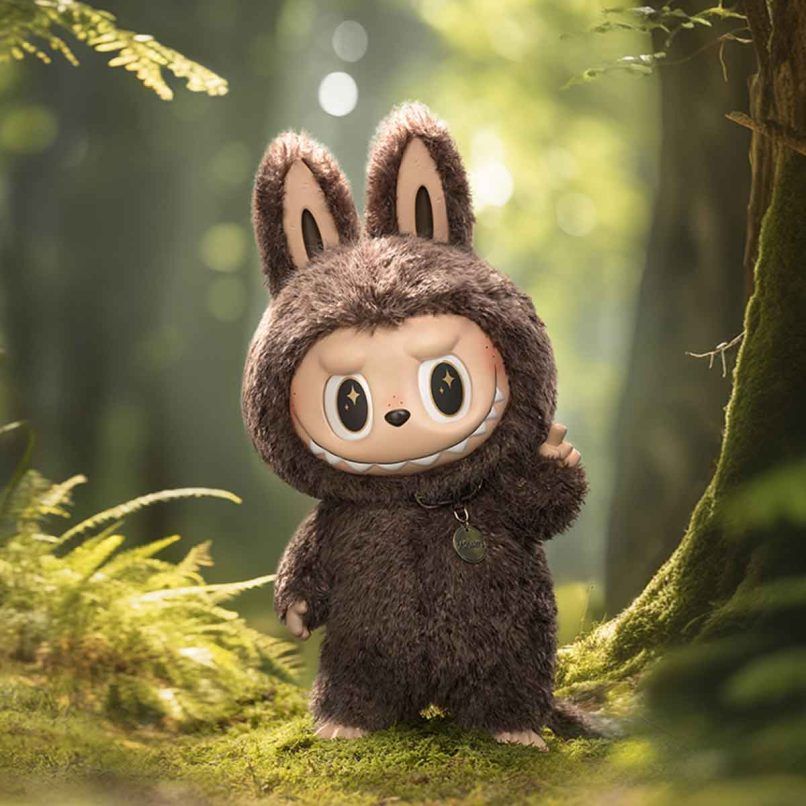
The Labubu is one of several characters in Kasing Lung’s tribe of elves that appear in his Monsters Trilogy stories. While there are more than one hundred separate kinds of Labubus and more than three hundred variations sold commercially, in general, the Labubu is a furry female creature – supposedly no larger than a house cat – with nine sharp teeth, large bunny-like ears, a furrowed brow, and large mischievous eyes. Out of the one hundred Labubus that exist, two of them are unique: the Zimomo – a male version with wings and tail, as well as Mokoko, a pink version with a white belly and a heart-shaped nose.
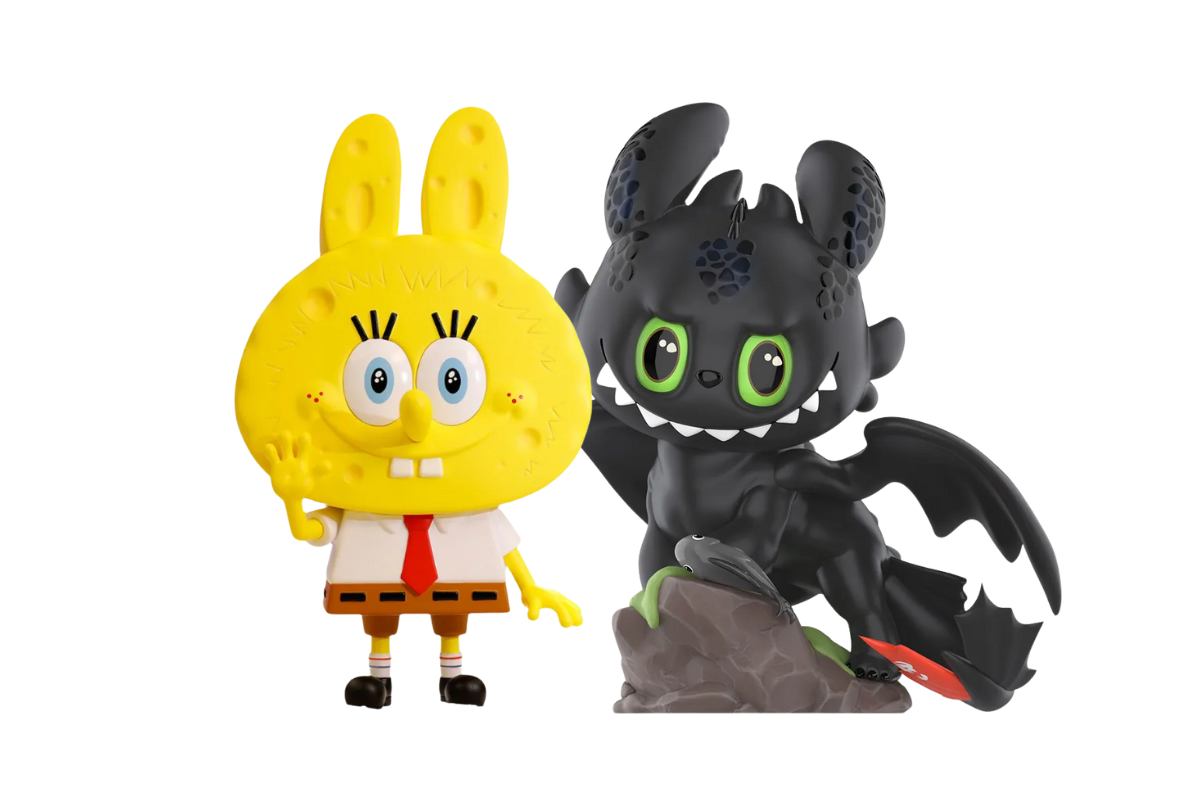
Outside of the canon Labubus mentioned above, there have been many Labubu crossovers with other popular characters, such as the BTS x Labubu collection from 2008 and the crossovers with Spongebob and How to Train your Dragon.
Who’s the artist behind the Labubu?
Kasing Lung (龍家昇) is the artist behind the Labubu. He was born in Hong Kong in 1972 and moved to the Netherlands when he was just seven years old. There, his parents ran a restaurant and lived above it. Lung didn’t speak Dutch well, so a teacher gave him Dutch children’s book to improve his fluency. It was during that time that he found comfort and inspiration in graphic novels and doodling. In an interview with CGTN Europe, he specifically mentions reading the Jip and Janneke books – a series written by Annie M. G. Schmidt and illustrated by Fiep Westendorp. These often humorous stories feature two preschool-aged children who play together, argue together, and get into mischief together – a clear parallel to the interactions between Lung’s characters in his own stories.
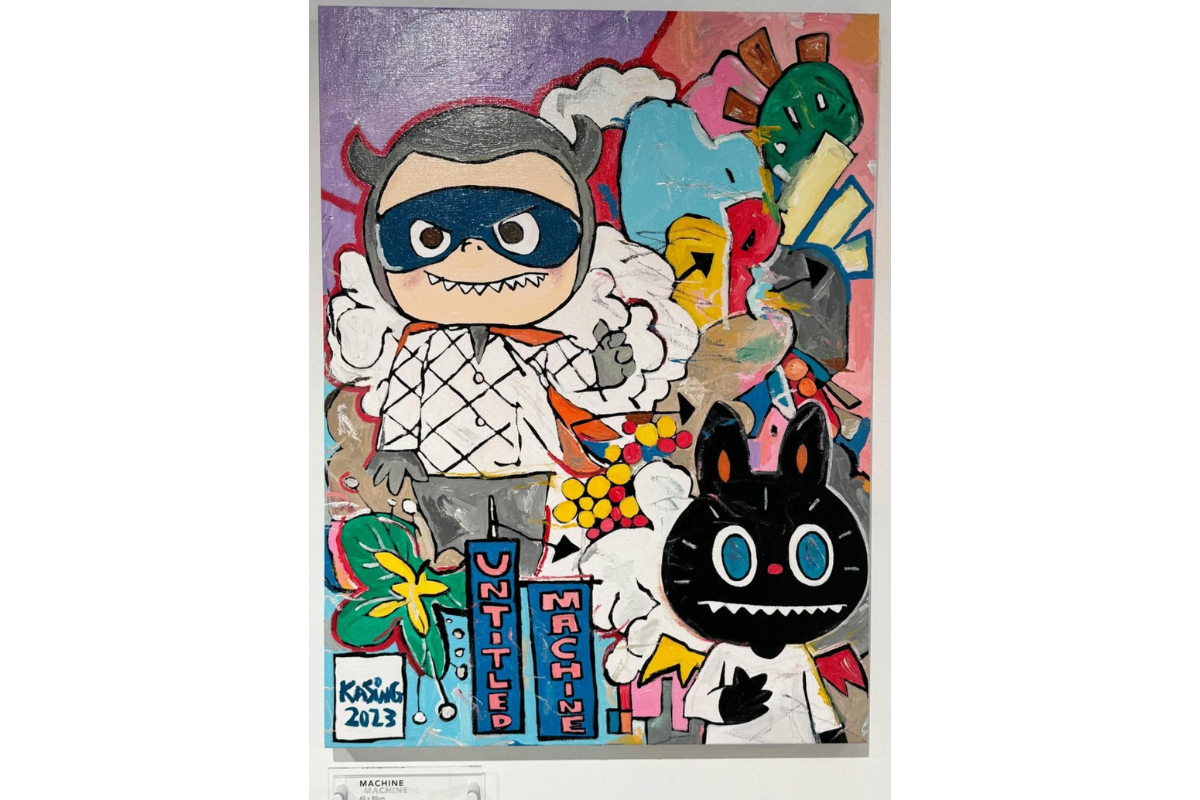
There are few sources that cover the period of Lung’s life between his childhood and his creation of The Monsters, but from a few interviews, we know that he went to art school and continued working on his art throughout his adult life. In an interview with Bryan Yambao for The Perfect Magazine, he says that he made a series named Toy Forest about animals and a little boy – a series that he worked on for four to five years. In another interview with Hypebeast, he mentions his wife and daughter and reveals that his character called ‘Yaya’ shares his daughter’s nickname. He also said that “a lot of the character’s names, like Zimomo’s, are made up by my daughter.” In his exhibition artwork, he focuses on topics that he hopes people will pay more attention to, such as climate change, sustainability, and the precarious relationship between humanity and technology. In reference to his painting ‘Machine,’ he said, “The two characters here are dressed in white, which serves as a symbol of their purity and innocence. At the same time, they’re surrounded by a lot of color, which in this painting represents something a little less harmonious, as it points to the amount of pollutants and artificial substances that make up our environments.”
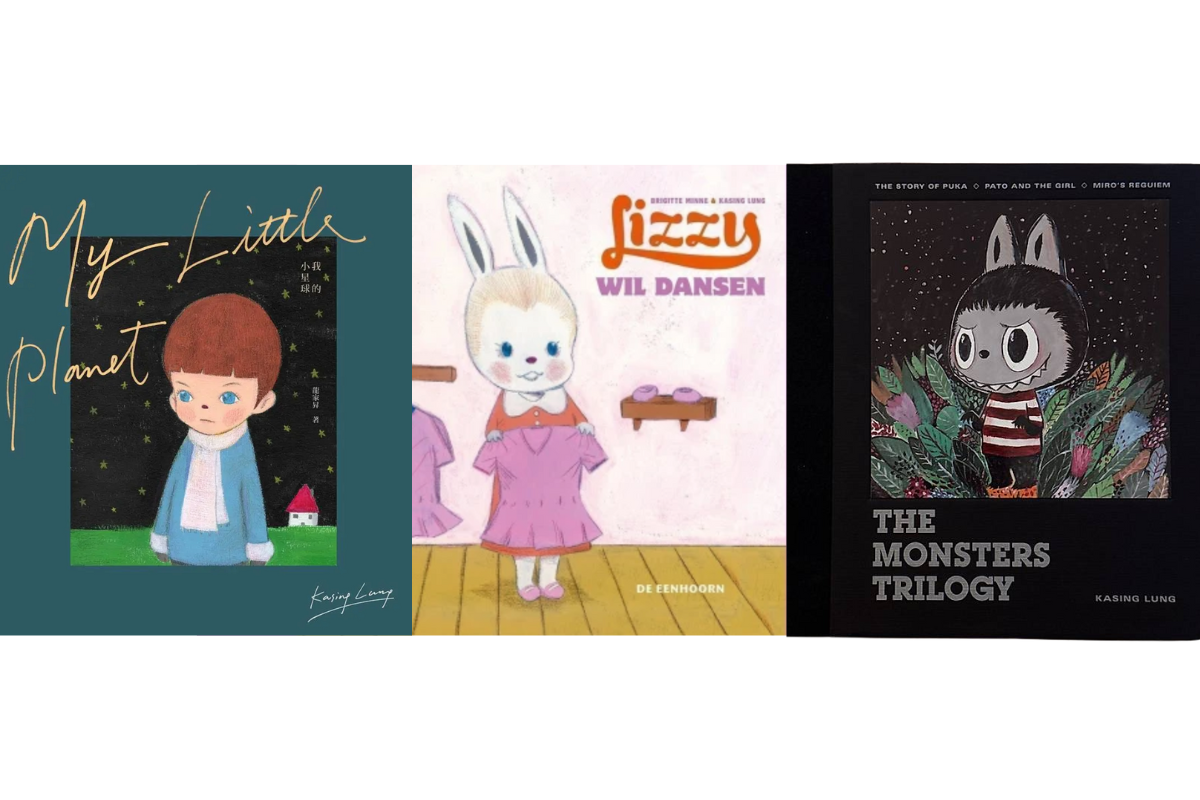
In 2011, he began illustrating for How2work in HongKong, making story books and figurines. His first illustrated book, called My Little Planet, was published in Chinese in 2013. Then, in 2014, he published a series of children’s illustrated books in collaboration with Brigette Minne, called Lizzy Wil Dansen, about young rabbit who pretends to be a cat in order to dance ballet. In 2015, he pivoted to The Monsters, which he says was influenced by Nordic mythology. The Monsters trilogy features three main stories: The Story of Puka, Pato and the Girl, and Miro’s Requiem. In his Hypebeast interview, Lung says that the Labubu, notably rabbit-eared, was the first character he ever created for the Monster series.
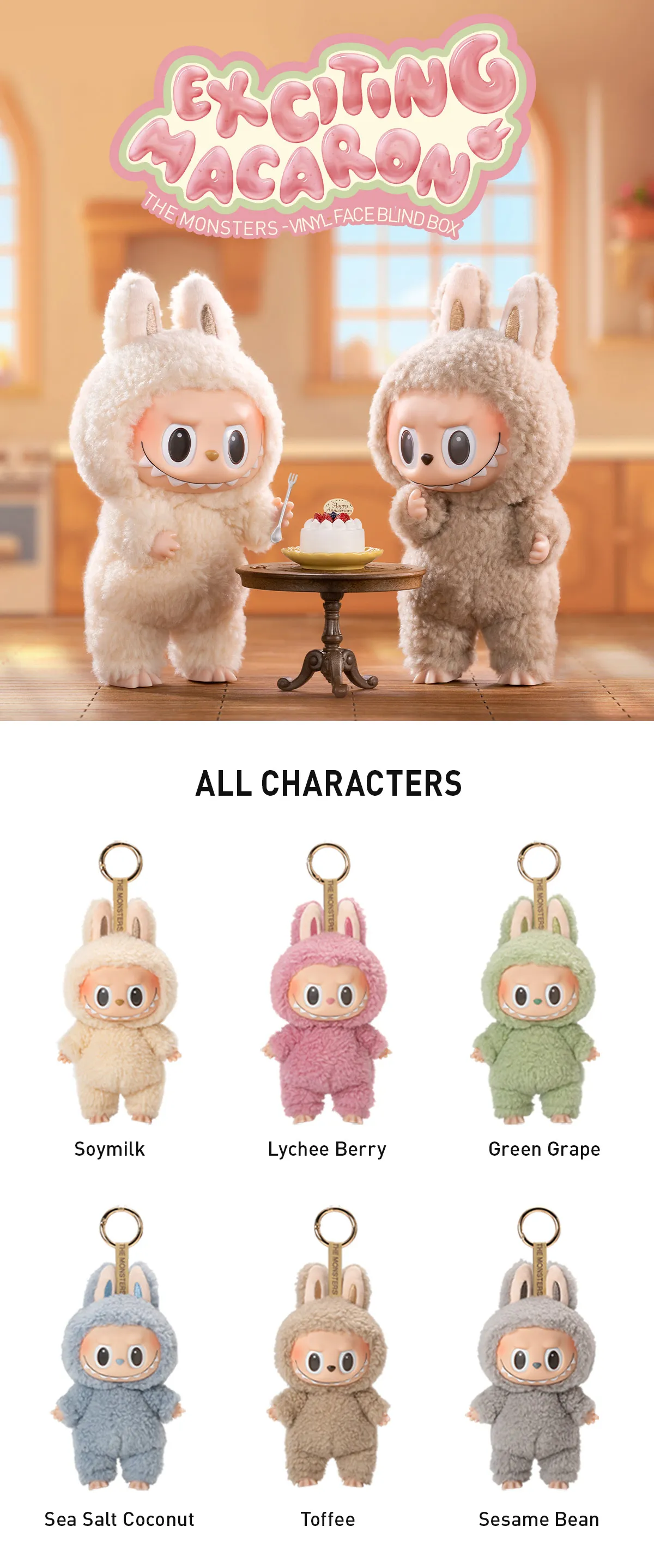
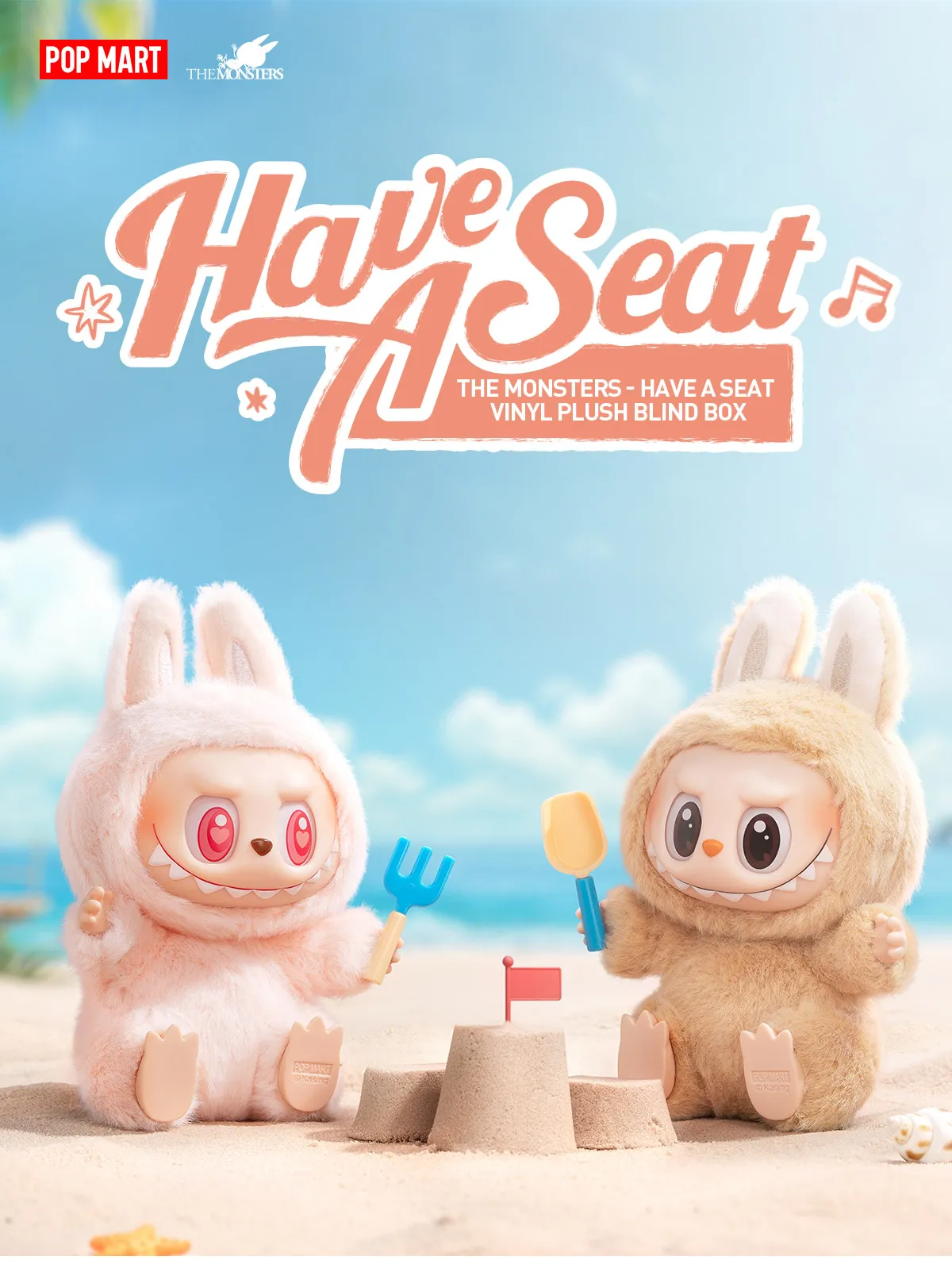
In 2019, he entered an exclusive license agreement with Pop Mart – a Chinese toy company whose blind boxes have proven quite successful. In October 2023, the Exciting Macaron collection launched, featuring pastel colored Labubus with dessert inspired names and key rings that allowed customers to attach Labubus to bags. Then, in 2024, the Have a Seat collection launched, featuring softer, furrier, and more expressive Labubus. In the same year, Pop Mart reported more $1.8 billion in revenue, with the Monster series characters contributing to more than one fifth of that revenue alone and reflecting a more than 700% increase in year over year growth.
How did the Labubu become so popular?
Ashley Dudarenok, the founder of the Hong Kong-based research firm ChoZan, claims that in the 2022 post pandemic world, people in China found escape in the idea of the Labubu, who “was very charming but chaotic” and “embodied anti-perfectionism.” At the time, the Labubu’s popularity was growing, though mainly in China and Southeast Asia. It was only natural that one of southeast Asia’s most successful pop stars would then launch the Labubu into stardom.
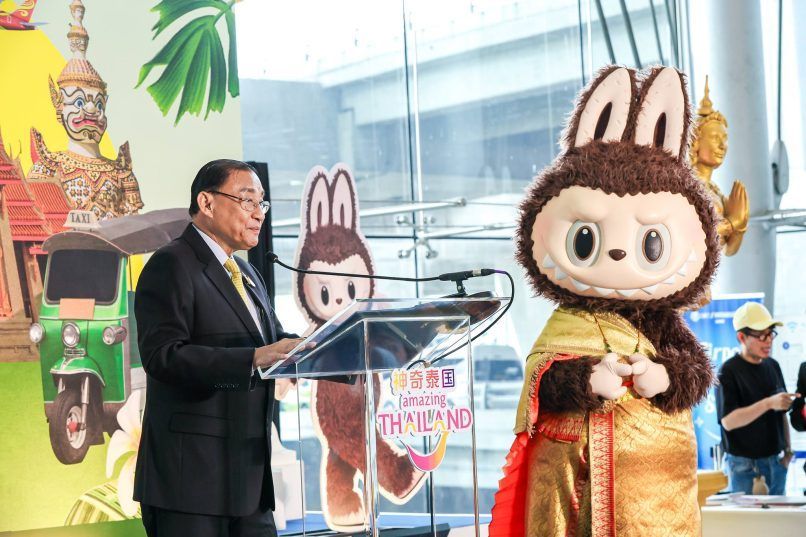
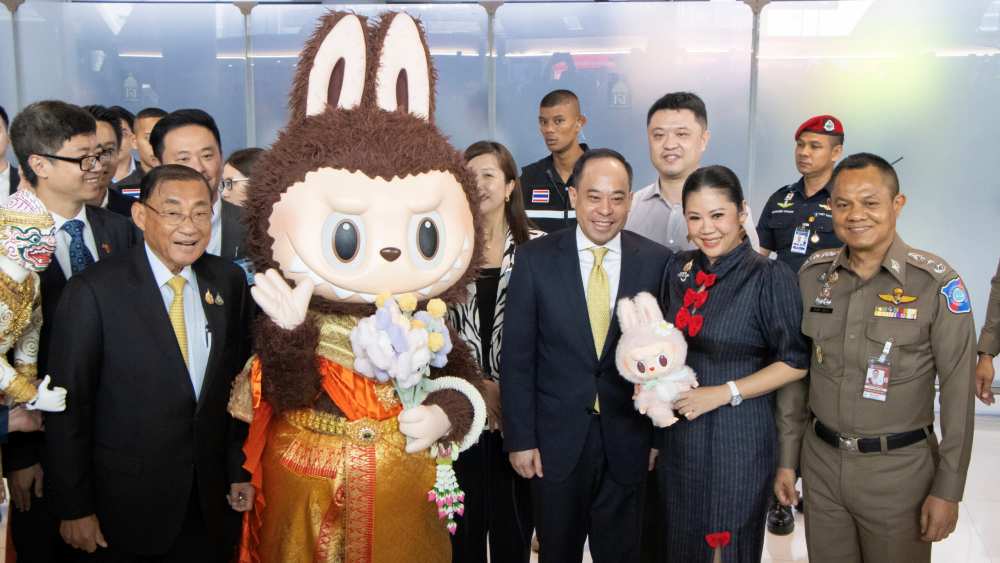
In 2024, La Lisa from Black Pink, a South Korean girl group that’s broken international records, shared a video on her hugging a Labubu on Instagram. After that, she featured one of her Black Pink co-stars, Rosé, also promoting Labubus. The meteoric rise didn’t happen overnight but started with other famous Thai personalities jumping on the Labubu trend, such as Thai actor and model Mario Maurer and Thai actress and model Araya Alberta. In 2024, the Tourism Authority of Thailand and Pop Mart jointly hosted a Welcome Ceremony of Labubu, marking a celebration of the 50th anniversary of diplomatic relations between Thailand and China. A promotional film of a Labubu mascot dressed in traditional Thai attire, exploring Thai landmarks, and participating in traditional Thai activities came out of that partnership. The Prime Minister’s Office Minister Puangpet Chunlaiad even appeared outside the government house, showing her Labubus from the Exciting Macaron series.
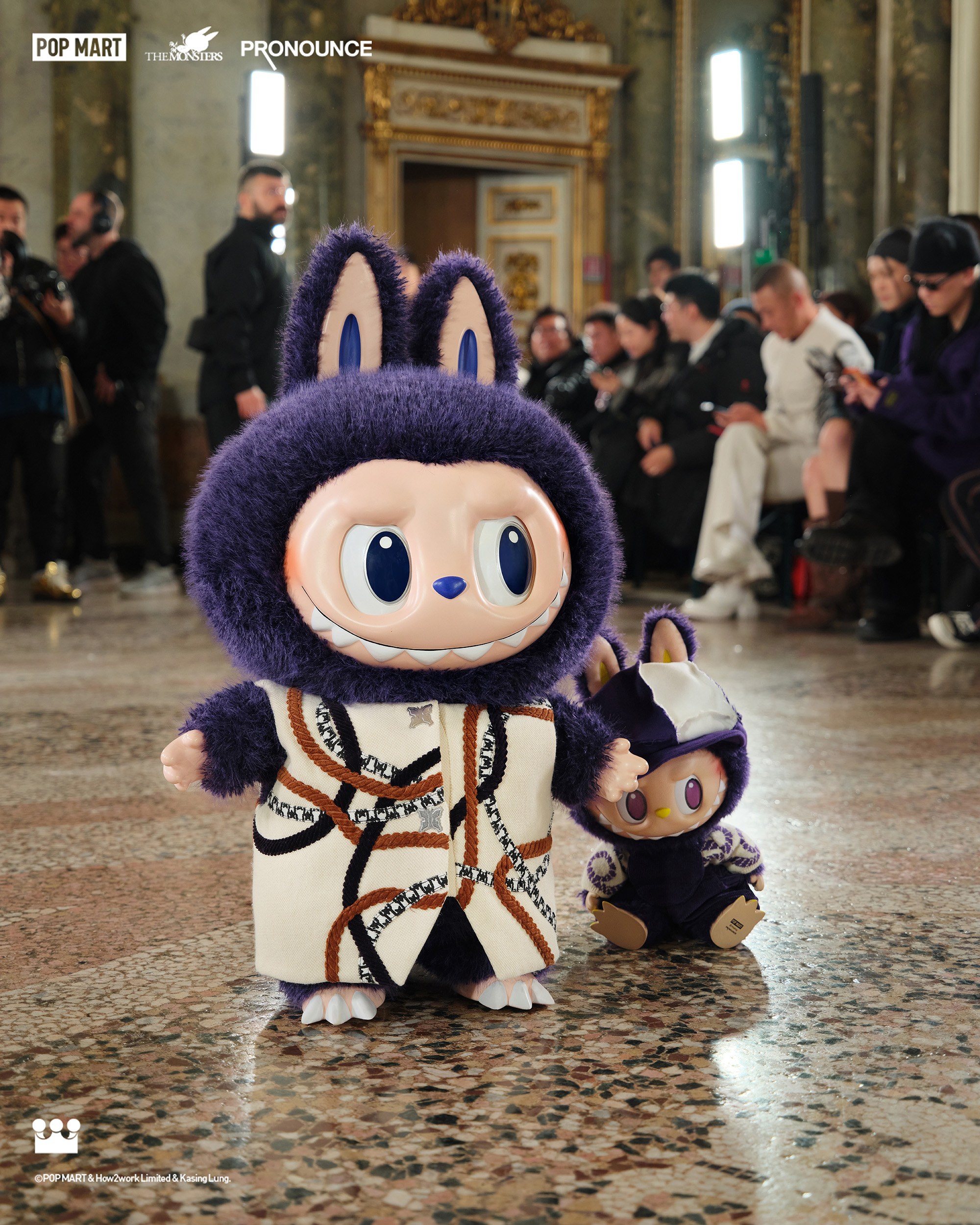
Then, in January of 2024, the Chinese designer brand Pronounce collaborated with Pop Mart at the Milan Men’s Fashion Week where it staged its Autumn/Winter 2024 collection. Both the Labubu and the Zimomo were seated in the front row wearing designer Pronounce clothing. From there, the Labubu’s alignment with luxury, high fashion, and high art only continued. Celebrities continued promoting the Labubu, including Dua Lipa, Rihanna, Kim Kardashian, and Sir David Beckham. In March 2025, Kasing Lung appeared at a signing in the Louvre in Paris, and in June, a life-sized Labubu sold for more than $170,000 at the first Labubu art auction hosted by Yongle auction in China.

What does the Labubu have in common with popular children’s characters from the past?
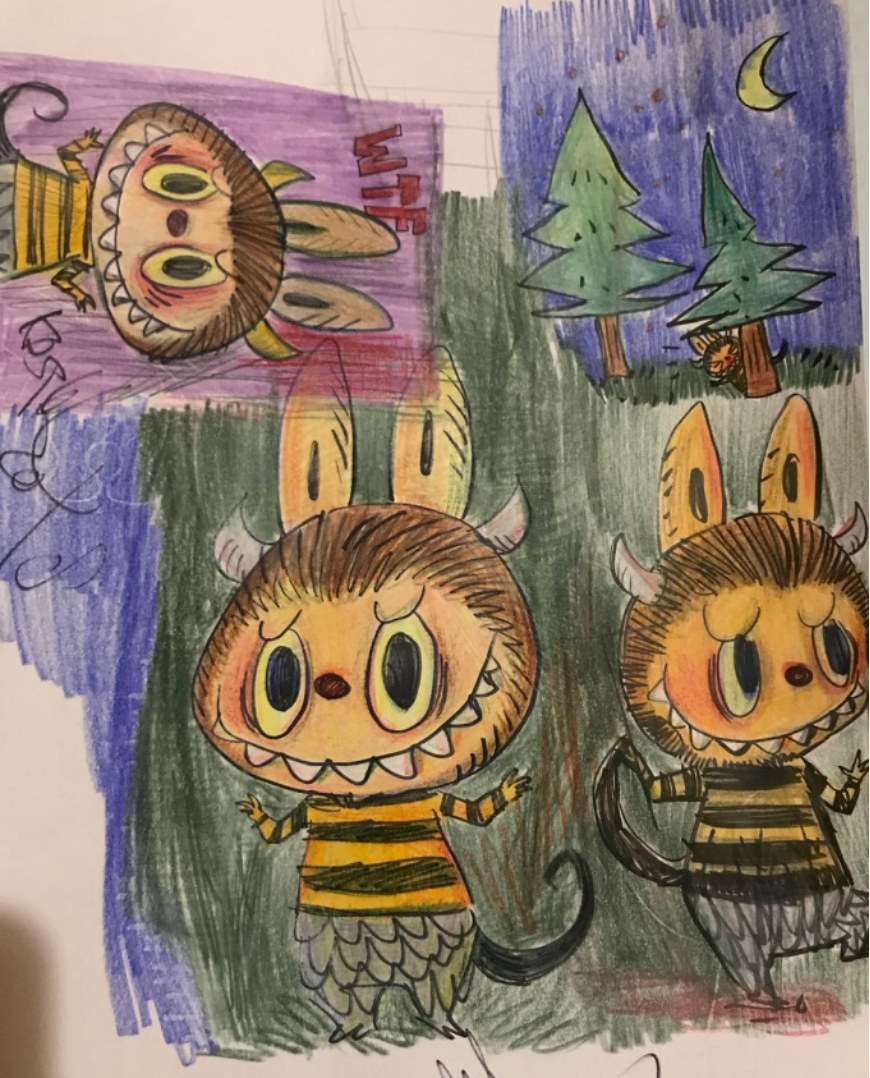
When I first saw the Labubu, I immediately thought of the characters from the children’s classic Where the Wild Things are, by Maurice Sendak. In fact, according to the Pop Mart World website, Lung did an exhibition at Paradise Toyland in Taiwan, where he showcased a Labubu version of Max – the main character in Where the Wild Things Are. There emotional atmospheres of the Monster world and the world of the Wild Things are similar. Both are worlds inspired by childish imagination, where teeth and claws aren’t necessarily something to run from but something that readers can vicariously adopt. Just like Sendak’s Wild Things, Lung’s Monsters romp about, engaging in both playful and mischievous behavior.
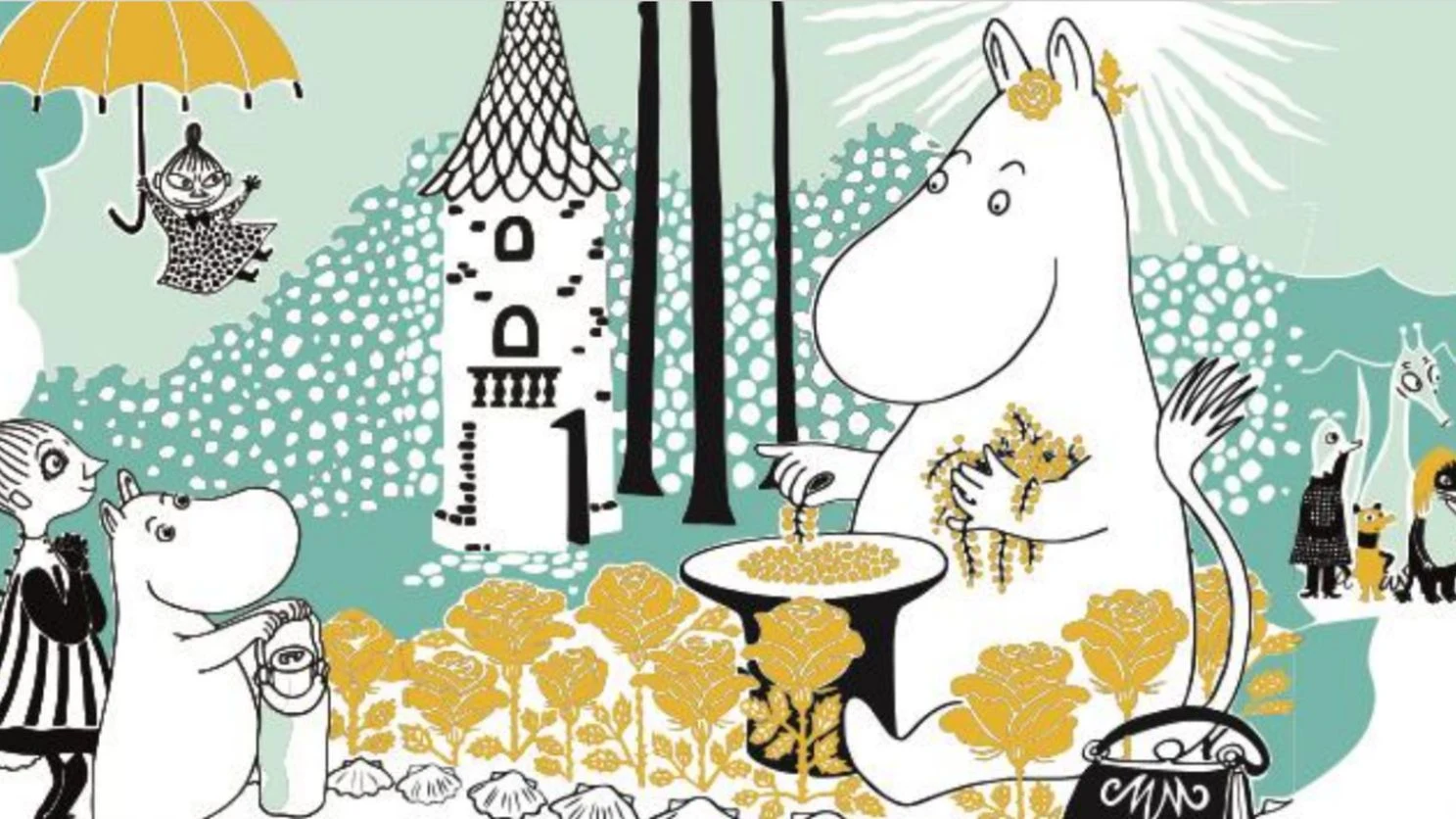
Another story universe that shares some characteristics with Lung’s Monster world is Tove Jansson’s Moominvalley. Originally published in Swedish in Finland, the Moomin books feature a family of trolls with rounded white snouts. They live in their Moominvalley home, where they live harmoniously in nature. Like the Monsters, the Moomins succeeded to connecting with adults, not just children, and features themes that are not entirely idyllic. The first Moomin book, The Moomins and the Great Flood, deals with themes of loss, sorrow, and hope. Jansson wrote it between 1939 and 1940, when Finland and the Soviet Union were engaged in the Winter War. In the book, there is a scene in which the Moominmama tells her son about a time when Moomins lived behind the stoves in people’s houses. When the son asks if people knew they were there, the mama replies, “They felt us mostly as a cold draught on the back of their necks sometimes – when they were alone.” Jane Shilling, a writer and critic for Prospect magazine points out that this scene highlights a signature “tension between safety and danger, the comfort of the familiar and a yearning for adventure, the potent tug of nostalgia and the risky allure of an uncertain future” in Jansson’s work.
Finally, I must mention The Smurfs, who Lung himself says inspired some of the character designs and character dynamics of his Labubus. For example, Lung says that the “the dynamic between the Zimomo and the Labubus was inspired by The Smurfs and Papa Smurf’s leadership.” Just like the Moomins and the Labubus, the Smurf characters are small creatures that live in a nature-based tribe who must fight against forces of evil, incarnated in the evil wizard character named Gargamel. Belgian comic artist and writer, Pierre Culliford created them in 1958, as supporting characters in a John & Peewit story called La Flute à Six Schtroumpfs, or The Flute of Six Smurfs. The word ‘smurf’ comes from the Dutch word meaning ‘elf’ or ‘sprite’ – another strong analogy to the Labubu’s role as an elf-like character.

How are Labubus perceived beyond the realm of art, fashion, and storytelling?
As someone who spends far too much time on Instagram and YouTube, it’s clear that most internet discourse falls into one two camps regarding the Labubu – positive and negative.
Let’s start with the positive. The positive online reception is primarily composed of Labubu collectors. There are various reasons for why people collect the dolls, from simply enjoying a cute hobby to signaling their membership to a certain socioeconomic or cultural group. I will discuss collector psychology in the next section. But for the most part, the people that post favorably about the Labubu are simply showing off their newest haul, their creative process in accessorizing or otherwise altering the original Labubu doll, Labubu-themed merchandise or fashion choices, or documenting their emotional journey while collecting. This is not a complete list, so I’m sure I’ve missed a lot of other pro-Labubu content, but these seem to be most popular on my feeds.

Then there’s the negative. As always, whenever there’s a massive following for anything, there comes the natural anti-following. Levi Hildebrand’s YouTube video titled How Labubu Overtook America covers most of the reasons for why Labubus basically suck. He starts off by comparing the Labubu to Stanley water bottles, as a way of saying that they’re just overhyped on social media, driving overconsuming masses to purchasing something they really don’t need. He claims that the Labubu “ruined collector culture” and self-proclaims himself as an anti-collector. He references the Art Basel source that I will refer to later in my ‘collector psychology’ section to comment on how the internet has supercharged an inherently human desire to collect and talks more favorably about the collecting hobby of the past. He himself admits to collecting Beanie Babies as a child.
I found his presentation a bit humorous because he simultaneously condemns the collection of things we don’t need while also speaking almost favorably about how it was in the past. He mentions that collecting of the past was slower and more intentional. I can see that, and I agree, but if that alone makes past collecting more acceptable, then his ‘people are collecting what they don’t need’ argument can’t be used against the Labubu. To his point about how the internet supercharges human behaviors – absolutely. But I can’t agree that the internet “ruined” collector culture. Collector culture is simply evolving, just like so many other technology-integrated parts of our lives. (See my post about AI & Writing)
He continues, likening the Pop Mart blind boxes to gambling and condemning people’s collection of Labubus to avoid the actual hard “introspective work” that is required to deal with the stress of real life. He then says that the hobby has “become corporate” and isn’t actually leading to a bigger community, unlike the collecting hobbies of the past.
His video is a fitting YouTube response to much of the current content online around the Labubus. Unfortunately, nuance (ironically something he says he appreciates) won’t make headlines. Neither will it generate clicks, likes, or subscribes. So, while his video is the natural pushback to the over-the-top Labubu hype online, it’s not a fair reception of the character itself.

Another reason why the Labubu receives some negativity is its price tag. Even though $27.99 for a toy no larger than six or seven inches (the height of the viral Exciting Macaron dolls) is pricey, it’s not unreasonably priced for a character that’s gained so much popularity. The issue about its pricing becomes more salient when we consider the resale market. On eBay and similar resale sites, an Exciting Macaron Labubu sells for $50-$120 dollars, depending on the color, and with this knowledge, plenty of resellers are purposely buying as much as they can from the Pop Mart site so that they can flip them. I currently have just one Labubu that I bought from an eBay seller for about $55 total.

Herein enters the next step of the Labubu’s affordability issue – you must have expendable income to participate in the Labubu collecting craze. The Labubu now falls into the category of luxury that is accessible by the general public (like most luxury items that you can access for less than the price it costs to max our your credit card). Many people in Hildebrand’s camp of contempt would reject the Labubu on the principle that it’s unnecessary, wasteful, a byproduct of hyper-consumerism, shallow, or downright morally wrong to buy something so frivolous because of online peer pressure at a time when many people are struggling. Another, adjacent camp would reject the Labubu on the principle of what it says about the owner. Look at this post made jointly by the Overhead IG and Overheard New York IG accounts. It features photos of a view from a boat, a presumed overpriced matcha drink, a picture of a massive private pool, The Surf Lodge (a well-known expensive surf lodge in New York), and a Labubu. The caption is: “if your summer instagram stories look like this, stay far away from me.” The message is clear – the type of people that spend money on luxury things like the Labubu are not welcome – whether it’s because they’re socioeconomically tone deaf, uber-privileged, irresponsible, or otherwise.
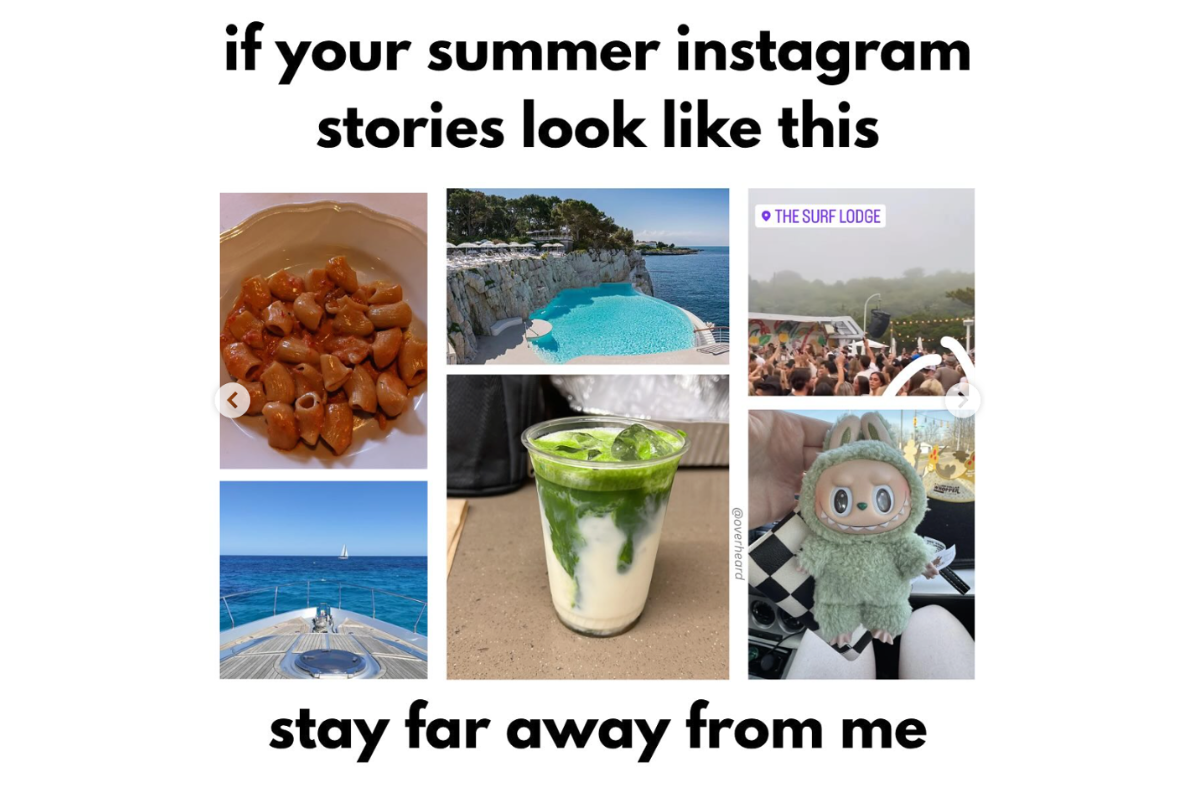
I’ll write more about how I feel about all of this in a later section. If you want to skip to it now, scroll down to the ‘What do people get wrong about the Labubu?’ section.
Why do people like to collect things?
While researching for this post, I found myself asking the above question. What is it about human psychology that makes us collect things?
There are an endless number of things that people have collected throughout history, but for easy reference, let’s think about the Yu Gi Oh trading cards that were all the rage in the 2000s, or even the Pokémon cards that are experiencing a resurgence in popularity (also as a result of an well-known internet personality promoting it). Then of course, there were the Beanie Babies during the mid to late 1990s and the Furbies in the same decade.

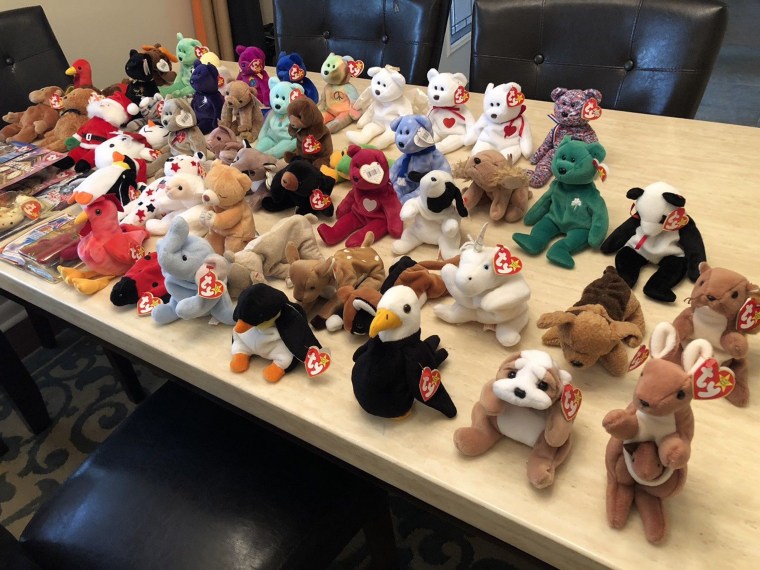
In the Art Basel source I mentioned earlier, Andrew Dillon, a V.M. Daniel Regents Professor at The University of Texas in Austin posits that collecting can be “a basis for community and connection and a mechanism of self-identity.” Sound familiar to what I mentioned at the end of the previous section? There is often something about the collectible that consumers identify with and then enjoy connecting with other people who feel the same. Speaking for myself, I loved the design of the Labubu. The price tag did dissuade me from buying one for quite a while, but ultimately, its scary/cute aesthetic won me over. See this IG post I made here that could give you additional insight into why I would appreciate a toy with conflicting aesthetics.
In collecting, there also is the desire to connect to the past. A lot of popular toy collectibles directly connect us to our childhood, where we can revisit the innocent fun of youth. Hildebrand dismissed this as aspect of collecting as avoiding the hard emotional work of processing difficult emotions, but I think this black and white view of something so uniquely human is neither helpful nor fair. Yes, we should do the hard work of learning how to process and deal with tough emotions, especially considering how chaotic the world seems, but I don’t think that the desire to escape for just a moment is bad. This Psychology Today article describes the collecting as “an escapist hobby,” a hobby that people often turn to during stressful or uncertain times. In the last ten years, we’ve gone through a worldwide pandemic that killed millions, at least two new on-the-ground wars, and a global rise in populistic authoritarianism. In this climate, if a slightly overpriced fuzzy toy can bring someone happiness and not bring them to financial ruin in the process, who is anyone to judge?
Then there is the thrill of the hunt – pleasure and reward seeking behavior. In the Journal of Antiques, Salimpoor describes the “dopaminergic burst” that collectors experience when they say that they’ve “fallen in love” with a collectible. The article continues to describe the years of “aesthetic, historical, and emotional” cues that wire the collector’s brain to respond in this way. The brain rewards us for acquiring something that fits our taste. This kind of behavior is also present in thrift shopping and really participating in any behavior that seeks novelty that aligns with our interests.
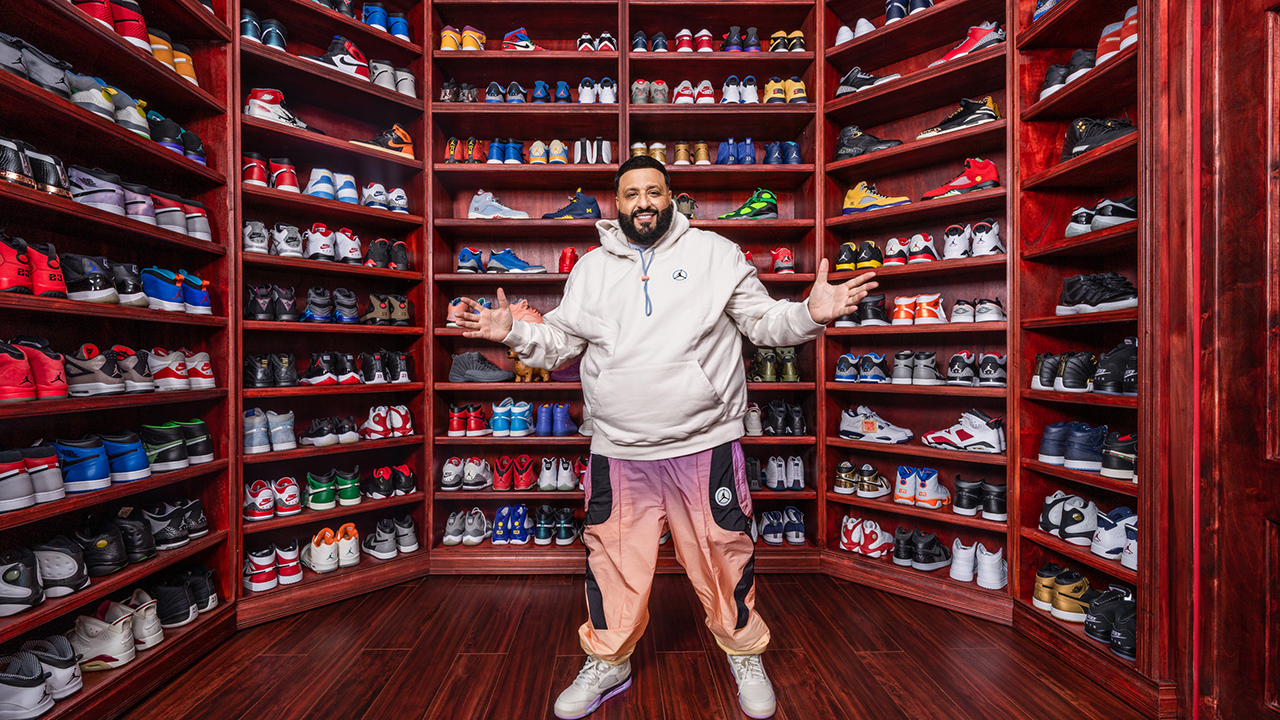
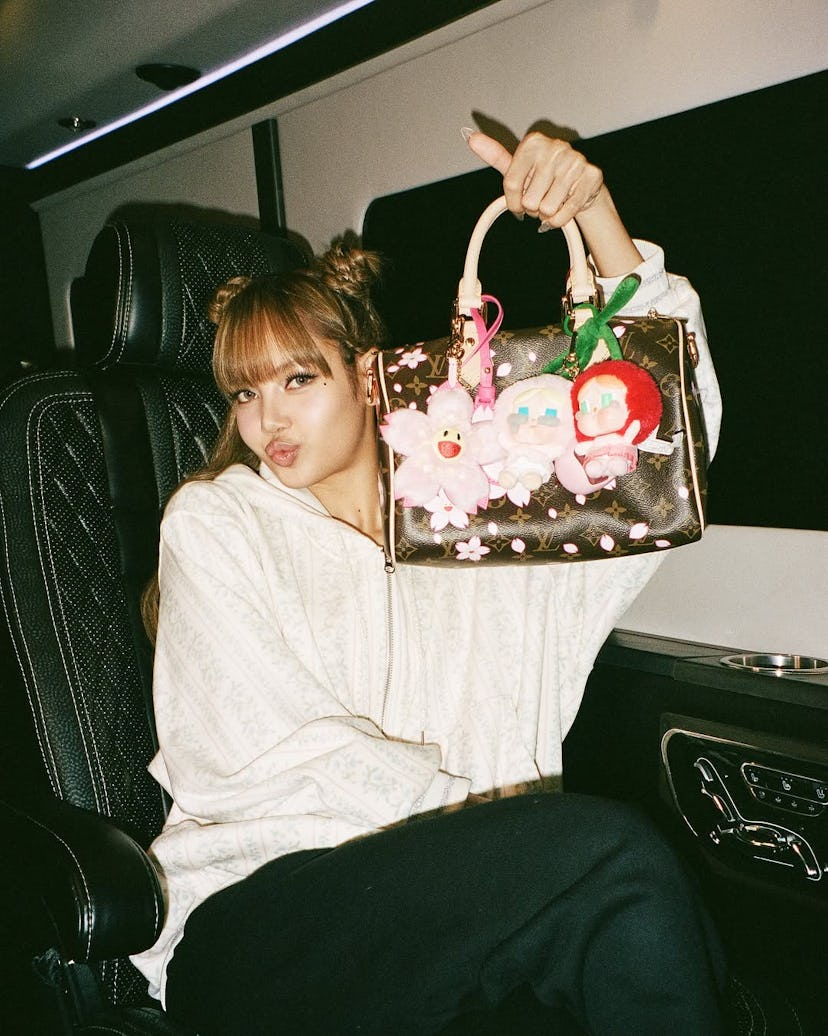
Finally, there is the financial incentive for collectors who hope that their collectibles will appreciate in value. I imagine that there is significant overlap between those who collect items for financial gain and those that enjoy the thrill of collecting items that fall into their areas of interest. For example, the sneakerheads that line up to buy $200+ shoes and then resell some of them for more than double the price online probably also really enjoy the thrill of researching, waiting for, and then finally acquiring the newest sneaker in their collection. The same holds true for the people that enjoy collecting their designer handbags. There are countless people online who do deep dives on the valuation of various handbags through time. That’s how I know Chanel and Hermès are collector favorites.
What do people get wrong about the Labubu?
There are a lot of fair critiques around the Labubu phenomenon, but in all that noise, the soul story of the Labubu and its creator’s vision get lost. Beside the fact that the Labubu’s success is yet another soft power win for Asia again (still freaking out over K-Pop Demon Hunters over here), it’s clear how a capitalistic lens dilutes the genuinely wholesome ideas that The Monsters were meant to capture.
Kasing Lung never made the world of the Monsters with the intention for it to become just another pawn in the over-consumption machine. From all his interviews, it seems like he genuinely just wanted to make stories about a world of monsters, in which characters including but not limited to the Labubu engage in whimsical and sometimes mischievous fun. In his CGTN Europe interview, he said that the “Labubu is the type of monster that is in my soul. Labubu can do what I want to do, but I don’t dare.” In the same interview, he said that he wants to focus more on storytelling and would love to make a Labubu movie. On his X account, he then also stated that he is working on a new book for 2025.
After watching and reading so many of his interviews, I began to feel a kindred spirit in Lung. He’s been a lifelong creator of characters and stories – a role he fell into at a young age, when he was in an uncertain and likely uncomfortable environment. And, as part of the Asian diaspora, his cross-cultural inspiration feels uniquely familiar to someone like me who grew up as a Chinese adoptee in America with a first-generation Chinese mother and a German immigrant father. As a kid, I too fell into creating and storytelling to make something that was both expressive, comforting, and community-building. In fact, after reading so much about him, I’ve been inspired to pick up where I left off in high school with a character that I created and made little comics about. The character was a squishy, mustached creature named ‘Moh’ that I created in my Biology class, and I would share newly drawn comics with my friends in homeroom.
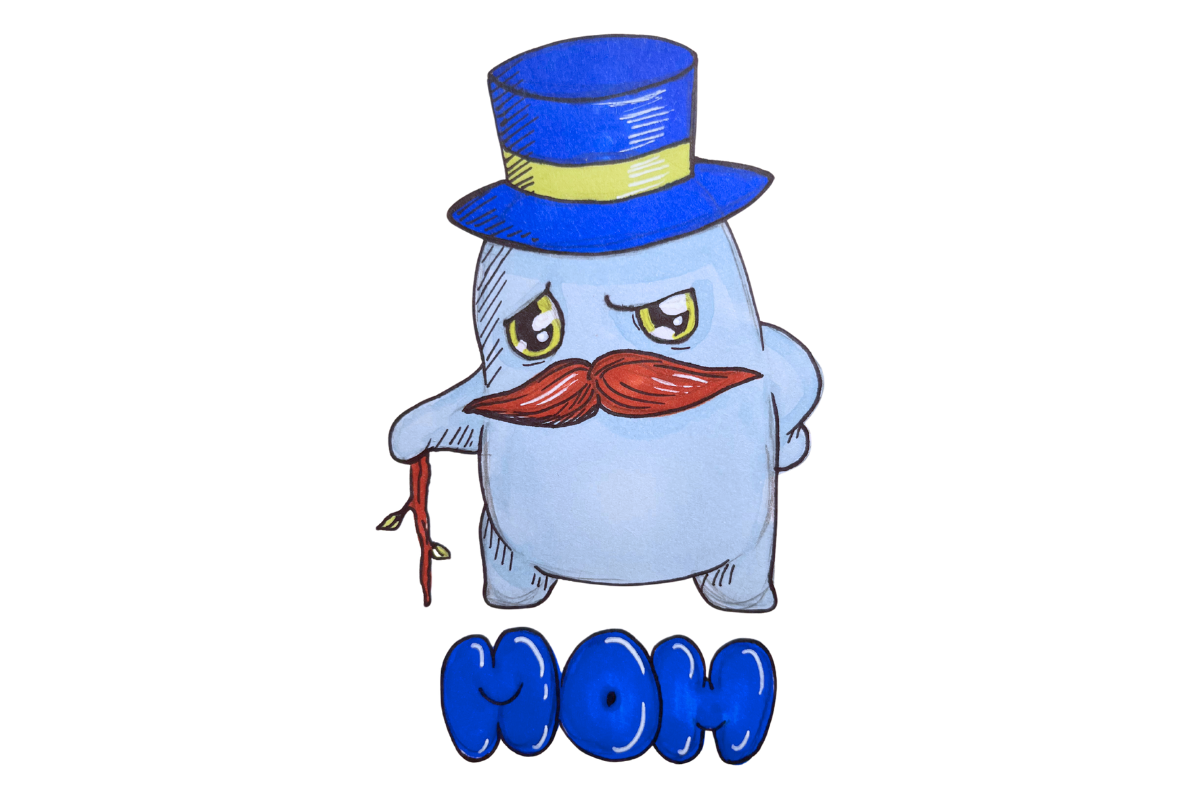
Now, as an adult, I’m still creating. But as Lung points out in an interview with the South China Morning Post, it’s a lonely process and requires persistence and the willingness to endure difficulty. This is truer than ever in the age of quick sound bites and easy to digest viral content. Even now, I am in the process of figuring out how to make my book enticing to people who might only ever want to engage with my story on screen (God, I wish).
Aside from all of this, Lung just seems like an all-around cool, humble guy and doting father. From a few perfunctory looks at his X profile, it seems he’s also an Elden Ring fan. He posted once about the Shadow of the Erdtree DLC and made another post featuring what looks like a Labubu in Elden Ring armor. I also scrolled through all of his Instagram posts and found his original concept sketches of the Monsters so endearing. It took ten long years, but the Labubu is now known on an international scale. While I’ve discussed the downsides of its exponential growth, I can’t help but be glad for the little seven-year-old boy who doodled in his school books, the young student who didn’t give up on his creative passion, and the father whose love for his daughter so clearly shines through his work.
That concludes today’s episode, but I’d love to hear your thoughts! Do you think the Labubu is overhyped? Did this post change your opinion about the Labubu? Do you have one already or are you planning to get one? Let me know what you think in the comments below!
Until next time!
Emily
Full List of Sources Below:
https://www.popmartworld.com/brand/the-monsters
https://www.youtube.com/watch?v=3A9jEPhGpKY
https://en.gallery-kaikaikiki.com/2020/10/bio_kasing-lung/
https://www.youtube.com/watch?v=_W6RYA2HlN4
https://www.youtube.com/watch?v=IIxQBYkAlUM
https://www.ourchinastory.com/en/14942/Story-of-Labubu’s-father:-HK-artist-Kasing-Lung
https://www.scribd.com/document/765043860/KASING-LUNG
https://www.youtube.com/watch?v=aiKAroSQ3-4 (CGTN interview)
https://bagaholicboy.com/2024/08/the-monsters-10-things-to-know-labubu
https://www.ourchinastory.com/en/14942/Story-of-Labubu’s-father:-HK-artist-Kasing-Lung
https://www.medicaleconomics.com/view/the-psychology-of-collecting
https://www.youtube.com/watch?v=AtaLtSMIwJY
https://www.tatlerasia.com/lifestyle/arts/kasing-lung-labubu-the-monsters-pop-mart
https://www.tatnews.org/2024/07/tat-and-pop-mart-welcome-labubu-to-explore-thailand/
https://www.moomin.com/en/explore/
https://www.moomin.com/en/blog/introduction-moomin-born/#c70f6487
https://www.toonsmag.com/where-do-smurfs-come-from-the-history-of-smurfs/
https://www.bbc.com/news/articles/cy4ydxlm9n9o